
Breast Augmentation in Ottawa
About Breast Augmentation
What is breast augmentation? Breast augmentation increases breast volume using implants or, in selected cases, fat transfer. At an Ottawa consultation, Dr. Sean C. Smith assesses chest dimensions, existing tissue, skin quality, nipple position and your goals. The plan considers proportion and tissue support rather than a promised cup size.
Which breast implant types and sizes should I compare? Saline and silicone gel implants both have a silicone outer shell; the filling differs. Dimensions, profile, surface and gel properties are separate choices. The term “gummy bear” does not identify one standardized device. Ask which implant model is proposed, why it suits your anatomy and what monitoring or future surgery may be needed. Implants are not lifetime devices.
Breast augmentation or breast lift? An implant adds volume; a lift changes breast position and shape. Existing drooping or a low nipple position may prompt discussion of a lift alone, a breast lift with implants or a staged plan. Fat transfer has different volume limitations and risks. No single option suits every patient.
How much does breast augmentation cost in Ottawa? The published surgical fee estimate is CAD $9,500–$11,000+, plus HST. Anesthesia and facility fees depend on the plan and procedure length. Your written quotation must confirm all included services, implant costs, follow-up and additional charges. A lift or revision changes the quote; published ranges are not all-inclusive guarantees.
What should I ask about recovery and risks? Discuss scars, altered sensation, capsular contracture, rupture, asymmetry, infection and possible revision, alongside work, lifting and exercise restrictions. Follow-up and future implant care belong in the decision as well as the initial operation.
Who may consider breast augmentation?
This procedure may be appropriate for individuals who:
Desire improved breast proportion or fullness
Feel their breasts do not align with their overall body structure
Are seeking refined enhancement rather than dramatic change
Value thoughtful planning and long-term outcomes
Wish to make decisions that respect a potential future pregnancy or breastfeeding


Breast augmentation surgery in Ottawa
Breast augmentation uses implants to increase breast volume or restore fullness lost after pregnancy or weight changes. Dr. Sean C. Smith plans each procedure around chest anatomy, existing breast tissue, skin quality and the result you want to achieve.
Your consultation includes a discussion of implant options, placement, recovery and long-term considerations. The aim is to choose an approach that fits your body and expectations, with a clear understanding of the limitations and risks.
Long-term implant considerations
Breast implants require long-term consideration. They are not lifetime devices, and further surgery may be needed. Discuss implant-specific risks, follow-up, possible rupture and capsular contracture, and current safety information before deciding.
On this page: Implant options · Recovery · Risks · Costs · Photos
Would implants alone meet your goals
Implants can add volume and improve proportion, but they do not correct significant breast drooping on their own. If both fullness and breast position are concerns, a breast lift with implants may be discussed. The examination helps determine whether augmentation alone or a combined procedure is appropriate.
Breast augmentation surgery may help address:
Desire for increased breast volume or projection
An imbalance between breast size and overall body proportion
Naturally smaller breast size
Loss of confidence related to breast appearance
All recommendations are individualized and based on anatomy rather than trends or external ideals.
Frequently Asked Questions (FAQ)
Planning size and proportion
Cup sizes vary between brands and are not a precise surgical measurement. Dr. Smith considers chest width, tissue coverage, skin support and your preferences when discussing implant size. Photos can help explain your goals, but the same implant volume can look different on different bodies.
Implant placement is also individualized. The decision to place an implant above or beneath the chest muscle depends on your anatomy and the trade-offs discussed at consultation. No specific cup size or result can be guaranteed.
How do we make decisions about implant placement
One of the most common questions in breast augmentation is whether implants should be placed over or under the chest muscle. This decision is often discussed online as a preference or trend, but in reality, implant placement is a structural decision guided by anatomy, tissue support, and long-term outcomes.
There is no universally “better” option. There is only one appropriate option for a specific body.
Why implant placement matters
Implant placement affects:
-
How the breast looks and feels
-
How the implant is supported over time
-
How the breast moves with the body
-
How results age
When placement is chosen without regard for anatomy, it can increase the risk of visible implant edges, unnatural movement, discomfort, or premature changes in breast position.
Under-the-Muscle Placement (Submuscular)
What under-the-muscle placement involves
With under-the-muscle placement, the implant is positioned partially or nearly fully beneath the pectoral muscle. This adds an additional layer of tissue coverage over the implant.
When under-the-muscle placement may be appropriate
This approach may be considered when:-
Natural breast tissue is limited
-
Soft tissue coverage is thin
-
A more gradual upper pole transition is desired
-
Long-term implant camouflage is important
-
The patient prefers a more natural slope in the upper breast
Considerations with under-the-muscle placement
Under-the-muscle placement:-
May involve more post-operative tightness initially
-
Can result in implant movement with muscle contraction
-
Requires careful planning for highly physically active patients
When selected appropriately, it can provide durable, natural-looking support.
Over-the-Muscle Placement (Subglandular)
What over-the-muscle placement involves
With over-the-muscle placement, the implant is positioned above the chest muscle and beneath the breast tissue.
When over-the-muscle placement may be appropriate
This approach may be considered when:
-
Adequate breast tissue is present to cover the implant
-
Skin and tissue quality provide sufficient support
-
Minimal muscle interaction is preferred
-
The individual desires less movement with muscle contraction
Considerations with over-the-muscle placement
Over-the-muscle placement:
-
Relies more heavily on tissue quality for support
-
May not be appropriate for thinner frames
-
Requires careful size selection to avoid strain on the skin
When chosen thoughtfully, it can feel natural and comfortable for the right anatomy.
How the decision is made
During consultation, we:
-
Assess breast tissue thickness and skin quality
-
Evaluate chest anatomy and muscle dynamics
-
Discuss activity level and lifestyle factors
-
Consider the desired shape and long-term goals
-
Recommend placement that best supports proportion and longevity
In some cases, additional techniques or combination approaches may be discussed to optimize support.
-
A clear explanation rooted in anatomy, not marketing
One of the most common questions in breast surgery is: “What cup size will I be after surgery?”
It’s an understandable question, and one we intentionally do not answer by promising a specific bra cup size.
This guide explains why cup sizes are not a reliable surgical goal, and why focusing on proportion leads to better, more enduring outcomes.
Cup size is not a medical measurement
Cup size is not standardized. It varies widely based on:
-
Bra brand and manufacturer
-
Chest width and ribcage shape
-
Breast shape and projection
-
Band size and fit preference
-
How a bra is worn or adjusted by the patient
Two people with the same breast volume may wear completely different cup sizes. Even the same person can wear multiple cup sizes depending on the bra.
Because of this variability, cup size cannot be used as a precise or reliable surgical endpoint.
Why does promising a specific cup size create problems?
When surgery is planned around a promised cup size, it increases the risk of a mismatch between expectation and reality.
Moving forward
Choosing breast augmentation is a personal and considered decision.
A private consultation provides the time and space to explore the available implant size options to meet your goals.
-
Why thoughtful planning matters
Revision surgery is one of the most difficult experiences for both patients and surgeons. While revisions are sometimes necessary, many can be avoided through careful decision-making, realistic expectations, and restraint at the initial surgery.
Our philosophy is built around planning for the future, not just the immediate result.
What leads to revision surgery
Revisions are most often required when surgery is driven by:
-
When anatomy is ignored, problems tend to surface later.
-
Size or change goals that exceed anatomical support
-
Inadequate attention to tissue quality and structure
Underestimating how the body will change over time
Our approach to revision avoidance
Revision avoidance begins before surgery.
We prioritize:
-
Comprehensive anatomical assessment
-
Conservative sizing and volume selection
-
Structural support over visual impact
-
Techniques that work with the body, not against it
-
Honest discussion of limitations and trade-offs
Sometimes this means recommending less surgery or no surgery at present.
The role of restraint
Restraint is not about withholding options. It is about protecting outcomes.
More aggressive surgery may look impressive early on, but it often places greater strain on tissues and increases the likelihood of future correction.
Thoughtful restraint keeps results stable, comfortable, and balanced over time.
Long-term planning is part of every decision
Every surgical recommendation is made with long-term behavior in mind.
We consider:-
How tissues will respond over years, not months
-
The impact of gravity, aging, and lifestyle changes
-
Whether the result can be maintained comfortably
-
How may future life events affect the outcome?
Surgery that respects time is more likely to age well.
When revision surgery is appropriate
Despite careful planning, revision surgery may occasionally be necessary due to:
-
Natural changes in the body
-
Healing variability
-
Life events such as pregnancy or significant weight change
-
Prior surgery performed elsewhere
Revision surgery is approached with the same principles as primary surgery: clear diagnosis, conservative correction, and long-term balance.
A shared responsibility
Successful outcomes are built through partnership.
Patients are supported with clear guidance on recovery, activity, and follow-up care. Long-term success depends on both surgical planning and patient participation in healing and monitoring.
Final perspective
The best way to manage revision surgery is to reduce the likelihood of needing it in the first place.
By prioritizing anatomy, restraint, and long-term thinking, we aim to deliver results that feel intentional, stable, and enduring.
A private consultation provides the opportunity to discuss goals honestly and develop a plan designed to protect outcomes, not just achieve them.
-
A long-term perspective on breast augmentation
Breast implants are medical devices, not one-time purchases. While they are designed to be durable and reliable, they exist within a living body that changes over time.
This guide explains how we think about implant longevity, monitoring, and long-term planning in a calm, honest, and fear-free way.
What longevity actually means
Breast implants are not designed to last forever, and they do not follow a fixed expiration timeline. Some implants remain stable for many years without issue, while others may require attention earlier depending on individual factors.
Longevity is influenced by:
-
Implant type and design
-
Placement and surgical technique
-
Tissue quality and skin support
-
Aging and gravity over time
The goal is not to promise a lifespan; it is to plan responsibly.
Why long-term thinking matters
Surgery that looks good initially but is not planned with the future in mind can lead to:
-
Premature stretching or descent
-
Changes in shape or position over time
-
Increased likelihood of revision
-
Discomfort or dissatisfaction later
Thoughtful planning protects not just the early result, but how that result behaves years down the line.
Monitoring breast implants
Routine monitoring is an important part of implant care.
Monitoring may include:
-
Periodic clinical examinations
-
Awareness of changes in shape, feel, or symmetry
-
Imaging when appropriate, depending on implant type and individual factors
Monitoring is about maintaining awareness and responding appropriately if changes occur.
When implants may need attention
Implants may require evaluation or intervention if there are:
-
Noticeable changes in breast shape or position
-
New firmness, discomfort, or asymmetry
-
Changes following significant weight fluctuation or pregnancy
-
Natural aging of the surrounding tissues
These situations do not necessarily represent failure; they might reflect the body's natural changes over time.
Replacement is not always required
There is a common misconception that implants must be replaced on a fixed schedule.
In reality:
-
Implants do not require automatic replacement
-
Surgery is recommended only when there is a clear medical or structural reason
-
Many patients live comfortably with the same implants for many years
Decisions are guided by condition, comfort, and balance, not fixed timelines.
How longevity influences initial planning
Long-term thinking begins before surgery.
During planning, we consider:
-
Appropriate implant size to avoid excess strain
-
Placement that supports tissue health
-
Skin quality and support structures
-
How the result should age with the body
Restraint at the beginning often leads to fewer problems later.
A note on revision surgery
Revision surgery is not necessarily a failure; we aim to minimize the need for it through thoughtful planning.
When revision is needed, it is approached with the same principles:
-
Clear diagnosis
-
Conservative correction
-
Long-term balance over short-term change
Final perspective
Breast augmentation is best approached as a long-term relationship, not a one-time event.
Our responsibility is to help patients make informed decisions, plan responsibly, and feel supported over time, not to promise permanence.
A private consultation provides the opportunity to discuss long-term considerations openly and build a plan designed for durability, comfort, and confidence.
-
Two different tools, two very different outcomes
Breast augmentation with implants and breast fat transfer are often discussed as interchangeable options. In reality, they serve very different purposes and produce different degrees of change, predictability, and longevity.
Choosing between them requires clarity about anatomy, goals, and long-term expectations.
Breast augmentation with implants
What implants do well
Breast implants are designed to create reliable volume and structure.
Implants offer:
-
Predictable size increase
-
Defined shape and upper pole support
-
Long-term volume stability
-
Greater ability to change breast proportions
For patients seeking a noticeable increase in breast size or a clear reshaping of the breast, implants remain the most effective tool.
Considerations with implants
Implants are medical devices and require long-term awareness.
Considerations include:
-
The need for future monitoring
-
Possible revision over a lifetime
-
Scar placement and healing
-
Thoughtful sizing to protect tissue over time
When planned conservatively, implants can produce stable, long-lasting results.
Breast fat transfer
What fat transfer can do
Fat transfer uses your own tissue to enhance the breasts.
Fat transfer may:-
Provide a modest increase in volume
-
Improve breast softness and contour
-
Enhance breast shape subtly
-
Avoid the use of implants
This approach is best suited for patients seeking breast refinement, not complete breast transformation.
Limitations of fat transfer
Fat transfer has important limitations that must be understood.
These include:-
Limited volume increase per session
-
Variable fat survival
-
Gradual resorption over time
-
Less predictability compared to implants
Fat transfer cannot reliably produce significant size increases or strong upper pole fullness.
Predictability vs subtlety
One of the most important distinctions between these options is predictability.
-
Implants offer consistency and structural change
-
Fat transfer offers softness and subtle enhancement
Neither option is inherently better; the right choice depends on the desired outcome and anatomy.
Body considerations
Fat transfer requires adequate donor fat.
Patients must have:
-
Sufficient fat reserves
-
Willingness to accept donor site healing
-
Realistic expectations about volume retention
Lean patients may not be good candidates for fat transfer alone.
Longevity and aging
Breasts continue to age regardless of the technique employed.
-
Implants maintain volume but interact with changing tissue over time
-
Fat transfer ages naturally with the body, but reminisce more than expected
Long-term planning is essential for both options.
Combined approaches
In select cases, fat transfer and implants may be used in combination.
This may allow:
-
Softening of implant edges
-
Improved contour in specific areas
-
More natural transitions
Combination approaches are planned carefully and are not appropriate for every patient.
How we decide
Dr. Smith’s recommendations are based on:
-
Desired degree of change
-
Breast anatomy and tissue quality
-
Body frame and proportions
-
Long-term goals and lifestyle
-
Willingness to accept variability vs predictability
In some cases, choosing not to operate, or to wait, is the right decision.
Final perspective
Breast augmentation and fat transfer are not competing procedures; they are different tools.
By understanding their strengths and limitations, patients can make decisions that align with their goals, anatomy, and long-term comfort.
A private consultation provides the opportunity to explore whether implants, fat transfer, a combined approach, or restraint is most appropriate for your goals.
-
Thoughtful placement, honest healing, long-term perspective
Scarring is an inevitable part of surgery, but how scars are created, managed, and allowed to heal makes a meaningful difference in long-term appearance and patient satisfaction.
Dr. Smith’s approach to breast augmentation prioritizes strategic incision placement, minimal tissue trauma, and realistic expectations, rather than promises of scar invisibility.
Incision placement is a strategic decision
There is no single “best” incision location for every patient. Incision choice is guided by anatomy, surgical goals, and long-term tissue health.
Common considerations include:
-
Breast shape and size
-
Skin quality and elasticity
-
Nipple position and anatomy
-
Desired implant size and placement
-
Need for precision and control during surgery
Incisions are chosen to balance surgical access with optimal healing and discreet long-term appearance.
Where incisions are commonly placed
Depending on anatomy and surgical plan, incisions may be placed:
-
Along the natural fold beneath the breast (inframammary fold)
-
Around the lower edge of the areola in select cases
Each option has advantages and trade-offs, which are discussed during consultation.
The healing timeline
Scars evolve gradually and require patience.
Patients can expect:
-
Early redness or firmness in the first weeks
-
Gradual softening and lightening over several months
-
Continued maturation for up to a year or longer
Judging scars too early often leads to unnecessary concern.
Individual healing differences
Every patient heals differently.
Scar appearance is influenced by:
-
Genetics
-
Skin tone and thickness
-
Overall health and nutrition
-
Adherence to post-operative care
No surgeon can guarantee a specific scar appearance, but careful planning improves predictability.
Scar care and follow-up
Patients receive guidance on scar care tailored to their healing progress.
This may include:
-
Incision care instructions
-
Activity modification during early healing
-
Scar therapies, when appropriate
-
Ongoing monitoring during follow-up visits
Consistency and time remain the most important factors.
A philosophy of realism and respect
Dr. Smith does not promise invisible scars.
Instead, the goal is for scars to become unremarkable, allowing attention to rest on proportion, shape, and balance rather than surgical evidence.
Final perspective
Successful breast augmentation scars are the result of thoughtful planning, restrained technique, and patient partnership during healing.
By prioritizing incision strategy, minimizing tension, and setting realistic expectations, Dr. Smith supports outcomes in which the patient ages quietly and naturally over time.
A private consultation provides the opportunity to discuss incision options, scar expectations, and healing in detail, without pressure or exaggeration.
-
Redefining a word that is often misunderstood
“Natural” is one of the most commonly used and least clearly defined words in breast augmentation. It is often used to describe size, shape, or implant type, without addressing what actually makes breasts look and feel natural over time.
Dr. Smith defines natural results by proportion, movement, and long-term harmony with the body.
Natural is not a specific size
A natural result is not determined by an implant's size.
Breasts can look natural at many sizes when:
-
The implant matches the chest width and frame
-
Tissue is not over-stretched
-
Proportions align with the rest of the body
Problems arise when size is chosen without regard for anatomy.
Natural is about proportion
Breasts should be proportionate and relate to the rest of the body.
A natural result considers:
-
Ribcage width and shoulder balance
-
Waist and hip proportions
-
Torso length
-
Posture and overall frame
When breasts are designed proportionally, they integrate seamlessly with the body rather than drawing attention to the surgery.
Natural means movement and softness
Natural breasts move.
Overly tight pockets, oversized implants, or excessive tension can lead to:
-
Firm or immobile breasts
-
A “stuck-on” appearance
-
Discomfort over time
A natural outcome is that breasts settle, soften, and move with the body.
Natural respects tissue limits
Breast tissue and skin have limits.
When these limits are exceeded:
-
Tissue thins over time
-
Implants become more visible or palpable
-
The breast ages poorly
-
Revision becomes more likely
Choosing restraint protects both appearance and longevity.
The implant type does not define natural
While implant selection matters, it does not determine whether results look natural.
Shape, placement, size, and surgical technique play a greater role than implant brand or material alone.
Focusing only on implant type oversimplifies a complex decision.
A philosophy of restraint and harmony
Dr. Smith’s approach prioritizes balance over boldness.
This includes:
-
Choosing sizes that respect anatomy
-
Placing implants to support natural movement
-
Avoiding tension that distorts tissue
-
Planning with long-term outcomes in mind
The goal is confidence, not commentary.
Final perspective
Natural breast augmentation does not announce itself.
By defining “natural” through proportion, movement, and longevity, Dr. Smith creates results that feel integrated, comfortable, and enduring, allowing patients to feel confident without feeling overdone.
A private consultation provides the opportunity to discuss what natural means for your body, your goals, and your future, with honesty and clarity.
-
Healing is part of the outcome
Breast augmentation healing, tissue adaptation, and settling are essential parts of achieving a natural, comfortable, and long-lasting result.
Dr. Smith approaches recovery with the same level of intention as surgery itself, emphasizing patience, tissue protection, and realistic expectations.
The early phase: Days 1–7
During the first week after surgery, the body is responding to the surgical change.
Patients commonly experience:
-
Swelling and firmness in the breasts
-
A feeling of tightness or pressure
-
Mild to moderate discomfort
-
Limited range of motion in the upper body
Breasts often sit high on the chest during this phase. This is normal and not representative of the final result.
Rest, gentle movement, and adherence to post-operative instructions are critical.
The settling phase: Weeks 2–6
As swelling gradually decreases, the breasts begin to soften and lower into a more natural position.
During this phase:
-
Swelling continues to improve
-
Implants begin to settle
-
Tightness gradually eases
-
Light activity may be resumed as advised
Asymmetry during this period is common and usually temporary.
The adaptation phase: Months 2–3
By this stage, most daily activities feel comfortable again.
Patients may notice:
-
Improved breast softness
-
More natural movement
-
Continued refinement of shape
-
Ongoing internal healing
Although the breasts may look healed externally, internal tissues are still adapting.
The maturation phase: Months 3–12
Final results develop gradually over several months.
During this phase:
-
Breasts settle fully into their long-term position
-
Scars continue to soften and fade
-
Tissue adapts around the implants
-
Results feel increasingly natural
Judging results too early can lead to unnecessary concern.
Why patience matters
Breast augmentation is influenced by:
-
Skin elasticity
-
Implant size and placement
-
Individual healing biology
-
Activity during recovery
Rushing activity or expecting immediate results can compromise comfort and outcomes.
Scars during healing
Incisions heal on their own timeline.
Patients may notice:
-
Early redness or firmness
-
Gradual softening over months
-
Continued improvement for up to a year or longer
Scar appearance varies and is influenced by genetics and care.
Supporting recovery
Patients are guided through recovery with clear instructions and follow-up care.
Support includes:
-
Activity guidance and restrictions
-
Garment recommendations
-
Scar care when appropriate
-
Monitoring for comfort and implant position
Healing is a partnership between patient and surgeon.
Emotional recovery is normal
It is common to experience emotional fluctuations during healing.
Patients may feel:
-
Impatient to see final results
-
Concerned about temporary changes
-
Sensitive to comments from others
These feelings usually resolve as healing progresses and results stabilize.
Final perspective
Breast augmentation recovery is a gradual process that rewards patience.
By respecting the healing timeline and allowing tissues to adapt naturally, Dr. Smith supports outcomes that feel comfortable, balanced, and enduring.
A private consultation provides the opportunity to discuss recovery expectations in detail and to plan surgery with clarity, preparation, and long-term perspective.
-


Consultation and Preparing for Surgery
During your consultation be prepared to discuss:
Why you want the surgery, your expectations, and the desired outcome
Medical conditions, drug allergies, and previous medical treatments
Current medications, vitamins, herbal supplements, alcohol, tobacco, and drug use
Family history of breast cancer and results of any mammograms or previous biopsies

Dr. Smith will also:
Evaluate your general health status and any pre-existing health conditions or risk factors
Examine and measure your breasts, including detailed measurements of their size and shape, skin quality, and placement of your nipples and areolas
Take photographs to evaluate and plan your procedure (with your consent)
Discuss your options and recommend a course of treatment
Discuss likely outcomes of breast augmentation and any risks or potential complications

Prior to surgery, you may be asked to:
Get a blood test
Adjust your current medications
Stop smoking
Avoid taking aspirin and certain anti-inflammatory drugs as they can increase bleeding
Breast augmentation surgery may be performed in an accredited outpatient or ambulatory surgical centre or a hospital.
Be sure to ask Dr. Smith questions. It's very important to understand all aspects of your breast augmentation surgery. It's natural to feel some anxiety, whether it's excitement for your anticipated new look or a bit of preoperative stress. Don't be shy about discussing these feelings with Dr. Smith.
To discuss your goals, options and questions with Dr. Smith, request a consultation.
Considerations for the future
For patients who plan to have children, surgical decisions must be made thoughtfully.
While breast augmentation does not prevent pregnancy or breastfeeding in most cases, future changes to the breasts are possible. Surgical planning takes these possibilities into account, emphasizing approaches that maintain flexibility and long-term balance.
These considerations are discussed openly during consultation.


Recovery and considerations
All surgery involves healing, recovery, and scarring.
Incisions are placed thoughtfully based on anatomy and surgical goals. Patients are guided through recovery with clear expectations, attentive follow-up, and realistic guidance around activity and healing timelines.
About results
Results from breast augmentation are intended to be proportional, natural, and enduring.
The goal is enhancement that complements the body rather than defining it, allowing confidence without drawing undue attention to the surgery itself.
A considered surgical experience
From consultation through recovery, care is delivered in a calm, private, and unhurried environment.
Patients are supported with honest guidance, careful planning, and consistent follow-up, without pressure to proceed.
Moving forward
Choosing breast augmentation is a personal and considered decision.
A private consultation provides the time and space to explore whether this procedure aligns with your goals, lifestyle, and future plans, and to discuss options carefully and without obligation.
The Procedure

Step 1
Anesthesia
Medications are administered for your comfort during the surgical procedure. Breast augmentation is performed under general anesthesia.

Step 2
The incision
Incisions are made in inconspicuous areas to minimize visible scarring. You and Dr. Smith will discuss which incision options are appropriate for your desired outcome.
Incisions vary based on the type of implant, degree of enlargement desired, your particular anatomy, and patient-surgeon preference.

Step 3
Inserting and placing the implant:
After the incision is made, a breast implant is inserted into a pocket either:
A. Under the pectoral muscle (submuscular placement), or
B. Directly behind the breast tissue, over the pectoral muscle (subglandular placement)
The method for inserting and positioning implants depends on the type of implant, degree of enlargement desired, your body type, and Dr. Smith’s recommendations.

Step 4
Closing the incisions
Incisions are closed with layered sutures in the breast tissue and with sutures just under the skin. Surgical tape is applied to optimize healing. Over time the incision lines will fade.

Step 5
See the results
The results of breast augmentation are immediately visible. Over time, post-surgical swelling will resolve and incision lines will fade. Satisfaction with your procedure should continue to grow as you recover and the implants settle into their final position.
Explore breast augmentation before-and-after cases:
Case 1 · Case 2 · Case 3 · Case 4 · Case 5 · Case 6 · Case 7 · Case 8
Case 9 · Case 10 · Case 11 · Case 12 · Case 13 · Case 14 · Case 15 · Case 16
Case 17 · Case 18 · Case 19 · Case 20 · Case 21 · Case 22 · Case 23 · Case 24
Case 25 · Case 26 · Case 27 · Case 28 · Case 29 · Case 30 · Case 31 · Case 32


Risks and Safety
The decision to have breast augmentation surgery is extremely personal and you'll have to decide if the benefits will achieve your goals and if the risks and potential complications are acceptable. Dr. Smith and/or staff will explain in detail the risks associated with surgery. You will be asked to sign consent forms to ensure that you fully understand the procedure and any risks and potential complications.
The risks include:
Anesthesia risks
Bleeding
Infection
Changes in nipple or breast sensation
Poor scarring of skin
Undesirable position of the implant
Implant leakage or rupture
The formation of tight scar tissue around the implant (capsular contracture)
Fluid accumulation (seroma)
Wrinkling of the skin over the implant
Pain, which may persist
Possibility of revisional surgery
BiALCL (breast implant associated anaplastic large cell lymphoma)
Breast implant associated illness
These risks and others will be fully discussed prior to your consent. It is important that you address all your questions directly with Dr. Smith.
Other important considerations:
Breast implants are not guaranteed to last a lifetime and future surgery may be required to replace one or both implants
Pregnancy, weight loss, and menopause may influence the appearance of augmented breasts over the course of your lifetime
Breast augmentation requires regular examinations of your breasts' health and to evaluate the condition of your implants
Recovery after breast augmentation
You will be monitored after surgery and receive instructions about breast support, wound care, medication and follow-up. Soreness and swelling can continue for several weeks. Return to work, lifting and exercise should follow Dr. Smith’s advice for your operation and recovery.
Plan time for rest and reduced activity, and discuss work or family responsibilities before surgery. Breast implants are not lifetime devices; future surgery may be needed. Ongoing breast-health care and implant follow-up remain important.

Results
The results of breast augmentation are immediately visible. Over time, post-surgical swelling will subside and incision lines will fade. Satisfaction with your new breast profile should continue to grow as you fully recover from surgery. In order to achieve optimal results, it is important that you follow Dr. Smith’s post-operative instructions and return for follow-up visits.
It's important to know that breast implants are not designed to last a lifetime. Your implants may need to be replaced. You should plan for an annual examination by Dr. Smith to evaluate your breast health and implant integrity.
Over time, your breasts can change due to aging, weight fluctuations, hormonal factors and gravity. If, after a period of years, you become dissatisfied with the appearance of your breasts, you may choose to undergo a breast lift or implant exchange to restore a more youthful contour.
Following Dr. Smith’s instructions is essential to the success of your surgery. It's important that the surgical incisions are not subjected to excessive force, swelling, abrasion, or motion during the time of healing. Dr. Smith will give you specific instructions on how to care for yourself.
Related information: breast implant follow-up and future care and breast lift options in Ottawa.

Breast augmentation cost in Ottawa
The cost depends on your proposed procedure. See fees and financing for current published information, and ask about the cost of your individual plan during consultation.
Request a consultation to discuss implant choices, whether a lift is needed, recovery and costs with Dr. Smith.
You will be charged one fee and this will include:
Anesthesia fees
Hospital or surgical facility costs
Cost of breast implants
Medical tests (if required)
Post-surgery garments (bra)
Surgeon's fee
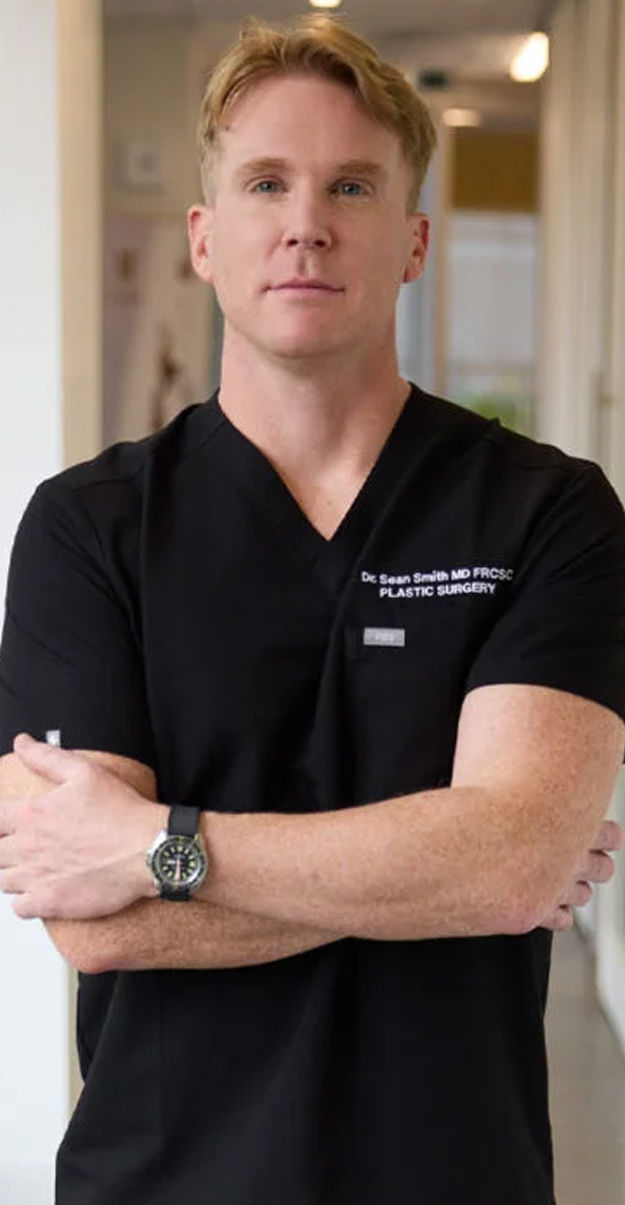
Dr. Smith
Your satisfaction involves more than a fee. When choosing a plastic surgeon for breast augmentation, remember that the surgeon's experience and your comfort with him or her is just as important as the final cost of the surgery.
Plastic surgery involves many choices. The first and most important is selecting a Plastic Surgeon you can trust. Plastic Surgeons such as Dr. Smith, certified by the Royal College of Physicians and Surgeons of Canada meet rigorous standards:
Board certification by Royal College of Physicians and Surgeons of Canada®
Completed five years of surgical training following medical school
Pass comprehensive oral and written exams
Complete continuing medical education, including patient safety
Perform surgery in accredited hospitals and surgical facilities
Following Dr. Smith’s Plastic Surgery residency, he completed an extra year of training, completing two additional clinical Fellowships to further his expertise in the field of Plastic Surgery. Please see his biography for more details.
Do not be confused by other official sounding boards and certifications. Be sure to choose a highly trained plastic surgeon who is board-certified by the American Board of Plastic Surgeons or The Royal College of Physicians and Surgeons of Canada.
This procedural information is intended strictly for educational purposes. Only models are depicted in these procedural information pages. It is not intended to make any representations or warranties about the outcome of any procedure. It is not a substitute for a thorough, in-person consultation with Dr. Smith.
CONTACT DR. SMITH
Dr. Smith is located in Ottawa's West End. Our office features ground-level entry and offers abundant parking. Over 500 free parking spots are available.
For Ottawa appointment inquiries, please use the form.

Rhinoplasty 5.0/5 — May 12, 2022 I highly recommend Dr. Smith for anyone considering a rhinoplasty. I am currently 8 weeks post op and I'm thrilled with my results so far. I have nothing but good things to say about Dr. Smith and his team at The Ottawa Clinic.
Breast Augmentation 5.0/5 — August 18, 2025 Dr. Smith is absolutely amazing, he is the most skilled surgeon in Ottawa and along with that he also has great bedside manner. I met a few surgeons for consults before I met Dr. Smith, for my breast augmentation. None of them were as thorough, knowledgable, kind, or positive as he was. From our first consult I knew I wanted him to be my surgeon. …
Upper and Lower Blepharoplasty 5.0/5 — November 22, 2024 Dr. Smith is an excellent surgeon and has a great personality. I had blepharoplasty ( upper and lower eyelid) and after couple of weeks it looked really good and even better now after two months. Dr Smith is knowledgeable and well skilled and make you at ease and answers all your questions and concerns. …
Deep Plane Facelift 5.0/5 — April 4, 2025 Dr. Smith is an exceptional surgeon. physician. He and his staff are professional, kind and caring. He performed a deep plane face lift for me just two weeks ago and I am already so pleased with the results. 10 out of 10 rating for Dr. Smith.
Breast Augmentation 5.0/5 — December 21, 2023 Dr. Smith is an exceptional cosmetic surgeon who has truly transformed my life through his remarkable skill and expertise. I recently underwent a breast augmentation procedure under his care, and I couldn't be more thrilled with the results. From the initial consultation to the post-operative care, Dr. Smith demonstrated the utmost professionalism and compassion. …
Abdominoplasty / Tummy Tuck 5.0/5 — October 22, 2021 I went to Dr. Sean Smith for an abdominoplasty (tummy tuck), I cannot be more thrilled with the results! From start to finish, he and his team made me feel comfortable with no pressure at all. Both the clinic and the private surgery location are clean and modern with ample free parking. …
Rhinoplasty 5.0/5 — April 1, 2023 In the summer of 2022 I met with Dr.Smith to inquire about rhinoplasty surgery. I was curious and equally nervous about proceeding. It was not until I met with Dr.Smith that I felt confident and safe in my decision to proceed. …
Mommy Makeover 5.0/5 — July 24, 2026 Choosing Dr. Sean Smith for my mommy makeover was one of the best decisions I’ve ever made. From my very first consultation, I knew I was in the right place. Dr. Smith was patient, honest, and took the time to understand exactly what I was hoping to achieve. He explained every part of the procedure thoroughly and made me feel comfortable and confident moving forward. …
Breast Augmentation 5.0/5 — April 19, 2024 I had breast augmentation with Dr. Sean Smith, and I am extremely happy with the results. After 8 weeks post-surgery, I can confidently say he is professional and his work is beyond perfect. The pain level was minimal, only 2 out of 10, and my recovery took just 5 days before I was back to work. …