
Non-Surgical FILLERS
Approached with care, judgment, and restraint
Facial aging is not the result of a single line or fold. It reflects gradual changes in bone structure, soft tissue support, and volume distribution over time. When support is lost, the face may appear less balanced or more fatigued, even when the skin itself is healthy.
Our approach to dermal fillers is not about filling lines or adding volume for its own sake. It is about strategic structural support, restoring balance where it has been lost, while preserving natural movement, expression, and identity.
A philosophy, not a product
Dermal filler is often misunderstood as a cosmetic shortcut. Used indiscriminately, it can distort facial proportions and compromise long-term outcomes.
In our practice, filler is treated as a medical tool, not a commodity.
Recommendations are based on:
Facial structure and proportions
Areas of true support loss
Relationship between bone, soft tissue, and movement
Long-term facial harmony rather than short-term change
Restraint is essential. Not every line requires filler, and in many cases, doing less achieves more.


Who may consider structural support treatment?
This approach may be appropriate for individuals who:
Notice changes related to volume loss rather than surface wrinkles
Feel the face lacks support or balance over time
Are seeking subtle correction rather than visible filling
Value long-term facial integrity
Prefer thoughtful medical guidance over trend-based treatments
Structural support treatment is not intended for those seeking dramatic fullness, exaggerated contouring, or frequent aesthetic interventions.
How we approach treatment
Each filler plan is developed as a structural strategy, not a routine injection session.
Careful assessment of facial anatomy, support points, and overall balance guides every recommendation. When filler is used, it is placed conservatively and deliberately, with respect for how the face moves and changes over time.
In some cases, filler may not be recommended at all. Alternative approaches or no treatment may better serve the long-term outcome.
Frequently Asked Questions (FAQ)
A calm, honest framework for choosing the right approach
Deciding between non‑surgical and surgical treatment is not about preference or trends. It is about what will best serve your anatomy, goals, and long‑term outcomes.
This guide exists to clarify that decision, without pressure, urgency, or sales tactics.
How we think about treatment decisions
Every recommendation begins with three questions:
-
What is the underlying structural concern?
-
Which approach addresses the root issue rather than just the surface?
-
What will age best over time?
Non‑surgical and surgical treatments are tools. Neither is inherently better. Each has a place when used thoughtfully.
When non‑surgical treatment may be appropriate
Non‑surgical options may be appropriate when concerns are:
-
Related to muscle activity rather than structure
-
Mild to moderate and early in progression
-
Volume‑related rather than positional
-
Best addressed with a subtle, temporary adjustment
Non‑surgical treatments can be effective when used conservatively and strategically, particularly for maintenance or early changes.
Limitations of non‑surgical treatment
Non‑surgical treatments:
-
Do not reposition tissue
-
Do not remove excess skin
-
Do not restore structural support
-
Are temporary by nature
Using non‑surgical treatments beyond their limits can compromise long‑term outcomes and distort natural anatomy.
When surgical treatment may be appropriate
Surgical options may be appropriate when concerns involve:
-
Tissue descent or excess skin
-
Structural imbalance or loss of support
-
Changes that no longer respond to non‑surgical care
-
Functional discomfort or limitation
Surgery addresses structure directly and provides more definitive, long‑lasting change when indicated.
Why do we not default to non‑surgical care
Non‑surgical treatments are often perceived as “easier” or “safer.” While they can be valuable tools, they are not risk‑free and are not always the most responsible choice.
In some cases, repeated non‑surgical treatment delays appropriate surgical care and increases overall intervention over time.
Our responsibility is to recommend what makes sense, not what is most convenient.
The role of restraint
Restraint protects outcomes.
Whether non‑surgical or surgical, doing less, when appropriate, often achieves better, more natural results. This philosophy guides every recommendation.
How decisions are made in consultation
During consultation, we:
-
Assess anatomy, movement, and proportion
-
Discuss goals and long‑term considerations
-
Explain which options are reasonable, and which are not
-
Allow time for reflection without pressure
Not every concern requires treatment.
Not every treatment requires action now.Making a considered choice
There is no urgency to decide.
The right approach is the one that aligns with:
-
Your anatomy
-
Your priorities
-
Your tolerance for maintenance
-
Your long‑term goals
Both non‑surgical and surgical care deserve thoughtful consideration.
Final reminder
The goal is not to do more.
The goal is to do what is appropriate.A private consultation provides the space to carefully explore these decisions without obligation.
-
Filler is not meant to inflate, it is meant to support
Dermal filler is often associated with visible plumping. While volume restoration can be beneficial, the long-term aesthetic outcome depends on where and how filler is placed.
There is a significant difference between structural support and superficial plumping. Understanding this distinction protects facial proportion and natural expression.
Dr. Smith approaches dermal filler as a tool for architectural reinforcement rather than just surface expansion.
Surface plumping: temporary volume, limited strategy
Superficial filler placement focuses on softening lines or adding visible fullness near the skin’s surface.
While this can produce short-term smoothing, excessive surface-level filling may:
-
Create puffiness
-
Blur natural facial contours
-
Distort dynamic movement
-
Contribute to filler migration
-
Accumulate with repeated treatments
When filler is layered superficially without structural planning, the face can appear heavier rather than refreshed.
Structural support: deeper, intentional placement
Structural filler placement targets deeper anatomical layers where foundational support naturally exists.
This approach may involve:
-
Reinforcing midface projection
-
Supporting key ligamentous attachment points
-
Restoring skeletal proportion
-
Improving lower face balance through strategic deep placement
By restoring support first, superficial creases often soften indirectly, without overfilling the surface.
The goal is lift through structure, not expansion through volume.
Why depth matters
The face ages in layers: bone remodels, fat compartments shift or diminish, ligaments loosen, and skin changes.
Placing filler only at the surface does not address these bigger structural changes. Over time, this can create:
-
Enlarged midface appearance
-
Blunted jawline definition
-
Distorted smile dynamics
-
Loss of natural contour transitions
Deep structural placement respects anatomy and reduces the risk of cumulative distortion.
Treating proportion, not lines
Lines are often a symptom of underlying structural change.
For example:
-
Nasolabial folds may reflect midface volume loss
-
Marionette lines may relate to chin and jawline balance
-
Under-eye hollowness may stem from cheek descent
Addressing foundation first often reduces the need for direct line filling.
Less volume, better balance
A structural approach often requires less product overall.
By placing filler strategically at key support points, facial balance can be restored without creating visible bulk.
Subtle reinforcement preserves:
-
Natural expression
-
Facial identity
-
Long-term proportion
Restraint protects aesthetics.
When surface refinement is appropriate
In select cases, superficial refinement may be appropriate for:
-
Fine perioral lines
-
Minor asymmetries
-
Lip border definition
However, these treatments are considered complementary rather than foundational.
Surface enhancement should never replace structural planning.
A philosophy of architectural balance
Dr. Smith approaches dermal fillers as a form of structural rebalancing. Each treatment plan is based on anatomy, proportion, and long-term harmony.
Filler is used to support, not inflate. To refine, not exaggerate.
This philosophy reduces the risk of overfilling and maintains natural facial character over time.
Final perspective
Structural support and surface plumping represent two fundamentally different philosophies of filler treatment.
By prioritizing deep anatomical reinforcement and proportionate balance, Dr. Smith creates results that appear refreshed and stable rather than augmented.
A private consultation allows for a comprehensive facial assessment to determine whether structural filler placement can restore balance while preserving natural identity.
-
More volume does not equal better results
Dermal fillers can restore balance, soften shadows, and improve proportion when used thoughtfully. However, excessive or repetitive filling can distort natural anatomy over time.
Overfilling is rarely intentional. It often occurs gradually, through small, repeated treatments that accumulate without reassessment of facial structure.
Dr. Smith approaches the use of fillers conservatively to protect long-term harmony and natural identity.
The cumulative effect of filler
Hyaluronic acid fillers are temporary, but they do not always disappear completely before additional product is placed.
Layering filler repeatedly can lead to:-
Progressive midface widening
-
Blunting of the jawline
-
Lip disproportion
-
Puffiness that obscures natural contour
-
Altered facial animation
These changes may occur slowly, making them difficult for patients to recognize until the imbalance becomes noticeable.
Periodic structural reassessment prevents unintentional accumulation.
Filler fatigue and tissue stretch
Soft tissues adapt to volume. When excessive filler is placed, tissues may stretch or lose natural tension over time.
This can create:-
Heaviness in the lower face
-
Flattened cheek definition
-
Distortion of delicate areas such as the lips or under-eyes
Removing volume later is more complex than avoiding overfilling from the beginning.
Loss of proportion
Facial aesthetics depend on the balance between features. Overfilling one area can disrupt relationships between:-
Cheeks and chin
-
Lips and lower face
-
Midface and jawline
-
Nose and chin projection
Treating isolated areas repeatedly without considering the overall proportion increases the risk of imbalance.
Dr. Smith evaluates the entire face before recommending additional volume.
Signs that less may be more
Subtle indications that volume may be excessive include:-
Blurred facial contours
-
Reduced natural shadow definition
-
Lips that appear heavy at rest
-
Cheeks that dominate facial balance
Recognizing these early allows for correction before distortion becomes pronounced.
A philosophy of structural preservation
Dr. Smith prioritizes architectural balance over volume expansion. Filler is used strategically to support areas of true deficit rather than to excessively chase surface smoothness.
Stopping before distortion protects identity and long-term outcomes.
Final perspective
Dermal filler is most effective when used with restraint. Overfilling compromises proportion, animation, and natural character.
By reassessing anatomy regularly and limiting volume to what is structurally appropriate, Dr. Smith ensures results remain balanced, refined, and sustainable over time.
A private consultation allows for a comprehensive evaluation of existing filler and discussion of whether refinement, pause, or volume reduction is the most appropriate next step.-
The face is a system, not a collection of isolated lines
Dermal filler is often requested for a specific concern: a fold, a hollow, a lip, or a jawline. However, facial balance is determined by the proportion between features, not by the appearance of one area alone.
Treating isolated lines without evaluating the overall structure can disrupt harmony and create unintended imbalance.
Dr. Smith approaches dermal fillers as full-face rebalancing rather than spot correction.
Proportion governs perception
Small changes in one region influence how the entire face is perceived.
For example:
-
Increasing cheek volume affects under-eye shadow and nasolabial folds
-
Augmenting lips alters the chin and lower face balance
-
Enhancing the jawline changes neck contour perception
-
Adjusting the chin shifts nose–profile harmony
Each intervention must be evaluated within the broader framework of facial thirds and transitions.
The facial thirds
A balanced face is often described in vertical thirds:
-
Upper third (forehead and brow)
-
Middle third (cheeks and midface)
-
Lower third (lips, chin, and jawline)
A disproportionate one-third can exaggerate perceived imbalance elsewhere. Adding volume to the midface without assessing the lower third, for example, may increase visual heaviness.
Structural planning ensures each third supports the others.
The importance of transitions
Harmony is created not only by volume, but by smooth transitions between regions.
Natural contour includes:
-
Gradual cheek-to-jaw flow
-
Defined but soft chin-to-neck transition
-
Balanced lip-to-chin projection
Overfilling isolated zones can interrupt these transitions, creating sharp edges or visible bulk.
Treating the cause rather than the symptom
A line is often the visible symptom of a bigger structural change.
For instance:
-
Nasolabial folds may reflect midface descent
-
Marionette lines may relate to chin projection and lower face support
-
Under-eye hollowness may stem from cheek volume loss
Addressing the foundation first often reduces the need for direct surface filling.
Less product, better balance
When facial proportion is prioritized, treatment often requires less filler overall.
Strategic placement at key support points can restore harmony without enlarging features.
The objective is refinement, not expansion.
Integration with surgical planning
In some cases, disproportion reflects structural descent rather than a loss of volume. Repeated filler treatments in these scenarios may compound the imbalance.
A comprehensive evaluation allows determination of whether a filler, surgical intervention, or a combination approach best restores proportion.
Each tool has a defined role.
A philosophy of whole-face assessment
Dr. Smith evaluates:
-
Skeletal projection
-
Fat compartment distribution
-
Ligament support
-
Skin quality
-
Dynamic movement patterns
This layered assessment ensures that filler is used intentionally and sparingly.
Final perspective
Facial aesthetics depend on proportion and transition, not isolated volume correction.
By treating the face as an integrated structure, Dr. Smith restores balance while preserving natural identity and long-term harmony.
A private consultation allows for a comprehensive facial assessment to determine whether structural filler placement can improve facial proportion in a measured, thoughtful way.
-
Facial aging does not occur at one level
Many aesthetic treatments focus on what is visible at the surface: lines, folds, or hollow areas. However, facial aging is a layered process that affects multiple anatomical levels over time.
Skin changes. Fat compartments shift or diminish. Ligaments loosen. Bone structure remodels subtly. Each layer contributes to the overall facial appearance.
Understanding these layers is essential to selecting the appropriate treatment and avoiding overcorrection.
Skin: texture and elasticity
The most superficial layer of aging involves the skin.
Over time, skin may demonstrate:
-
Fine lines
-
Reduced elasticity
-
Thinning
-
Changes in pigmentation
Skin treatments, neuromodulators, and certain energy-based procedures can improve surface quality. However, smoothing the skin alone does not restore deeper structural support.
Fat: volume loss and redistribution
Facial fat is organized into distinct compartments. With age, these compartments may:
-
Lose volume
-
Shift position
-
Deflate unevenly
This can create hollowness in some areas and heaviness in others.
Dermal filler or fat grafting may restore selective volume. However, volume replacement must be anatomically precise to avoid distortion.
Ligaments: support and descent
Retaining ligaments anchor soft tissue to deeper structures. As ligament support weakens over time, tissues may descend.
This descent contributes to:
-
Deepened nasolabial folds
-
Jowling along the jawline
-
Neck laxity
No amount of superficial filler can tighten lax ligaments. Structural repositioning procedures are required when descent is significant.
Bone: foundational remodeling
Subtle bone remodeling occurs with aging, particularly in the midface, jawline, and chin.
Loss of skeletal projection can influence:
-
Midface flattening
-
Chin retrusion
-
Jawline definition
In select cases, structural augmentation, either with filler placed deeply or surgical implants, may restore foundational balance.
Why overfilling happens
When layered aging is not recognized, superficial volume may be added repeatedly to compensate for bigger structural changes.
This approach can lead to:
-
Facial widening
-
Loss of contour definition
-
Distortion of natural transitions
Treating the wrong layer produces temporary smoothing but a long-term imbalance.
Choosing the right layer to treat
Effective aesthetic planning begins with identifying which anatomical layer is primarily responsible for the concern.
-
Skin issues require skin-focused treatment
-
Volume loss requires selective structural restoration
-
Tissue descent may require surgical repositioning
-
Skeletal imbalance may require foundational augmentation
Each layer demands a different solution.
A structural philosophy
Dr. Smith evaluates facial aging comprehensively before recommending treatment. Rather than applying volume indiscriminately, each intervention is selected based on anatomical diagnosis.
This layered approach protects proportion, preserves identity, and minimizes the risk of cumulative distortion.
Final perspective
Facial aging is not one-dimensional. It involves changes in skin, fat, ligament support, and bone structure.
By identifying the correct anatomical layer to address, Dr. Smith develops treatment strategies that are precise, proportionate, and designed for long-term harmony.
A private consultation allows for a detailed, layered assessment to determine which non-surgical or surgical treatment is most appropriate for your anatomy and goals.
-
Sometimes refinement begins with removal
Dermal fillers can restore balance and support when placed thoughtfully. However, in certain situations, dissolving existing filler is the most responsible first step.
Reversal is not a failure. It is a strategic reset that allows facial anatomy to be reassessed without distortion from accumulated product.
Dr. Smith approaches filler dissolution as a corrective and planning tool, not an emergency measure alone.
When reversal may be appropriate
Filler dissolution may be considered when:
-
Facial contours appear widened or heavy
-
Lips feel disproportionately full at rest
-
Midface volume obscures natural definition
-
Migration is suspected
-
Repeated treatments have altered the proportion
-
Surgical planning requires anatomical clarity
In these cases, adding more filler rarely improves balance.
Filler migration and accumulation
Hyaluronic acid filler can subtly shift over time, particularly in areas of high movement, such as the lips and perioral region.
Layering additional product without reassessment may create:
-
Blurred borders
-
Puffiness in unintended areas
-
Distortion of smile dynamics
Dissolving excess or migrated filler allows tissues to return closer to baseline before refinement.
Preparing for surgery
In patients considering surgical procedures, such as facelift, blepharoplasty, or chin augmentation, pre-existing filler can mask true anatomy.
Reversal may be recommended to:
-
Accurately assess skeletal projection
-
Evaluate natural tissue descent
-
Avoid operating on distorted contours
Clear structural understanding improves surgical precision.
The dissolution process
Hyaluronic acid fillers can be reduced using an enzyme (hyaluronidase) that breaks them down.
Treatment is performed conservatively and may require staged sessions depending on the amount of filler present.
Mild swelling is common temporarily as the product disperses. Final contour is assessed after resolution.
Emotional considerations
Choosing to dissolve filler can feel uncertain for patients who have grown accustomed to added volume.
Clear discussion of goals, proportion, and long-term harmony is essential. Often, patients discover that less volume restores natural definition rather than diminishes it.
Reversal is about refinement, not regression.
When not to dissolve
Not all concerns require full reversal. In some cases, strategic refinement or redistribution planning is more appropriate.
Dr. Smith evaluates:
-
Amount and location of existing filler
-
Tissue quality
-
Overall proportion
-
Long-term treatment goals
The plan is individualized.
A philosophy of structural clarity
Filler should enhance anatomy, not obscure it.
When cumulative volume compromises proportion, dissolving and reassessing protects long-term harmony. Beginning again with a structural plan often yields more refined and natural results.
Final perspective
Reversing filler is sometimes the most thoughtful step toward restoring balance. By prioritizing anatomy over accumulation, Dr. Smith ensures that treatment decisions support proportion, identity, and long-term aesthetic stability.
A private consultation allows for a comprehensive evaluation of existing filler and a discussion of whether dissolution, refinement, or surgical intervention is most appropriate.
-
Two different philosophies of volume restoration
Not all injectable treatments function the same way. Hyaluronic acid (HA) fillers and biostimulatory injectables such as poly-L-lactic acid (commonly known as Sculptra®) are often grouped together under the term “filler,” but they operate through fundamentally different mechanisms.
Understanding these differences is essential when selecting the appropriate treatment for structural support, subtle rejuvenation, or long-term collagen stimulation.
Dr. Smith evaluates anatomy, aging patterns, and long-term goals before recommending either approach.
Hyaluronic Acid Fillers: Immediate Structural Support
Hyaluronic acid is a naturally occurring substance in the body that attracts water and provides volume.
When placed strategically, HA fillers can:
-
Restore midface projection
-
Refine jawline or chin contour
-
Enhance lip structure
-
Improve under-eye hollowing
-
Support facial proportion at specific anatomical points
Results are visible immediately and can be adjusted over time. HA fillers are also reversible with hyaluronidase, providing an added layer of safety and flexibility.
HA fillers are typically best suited for:
-
Precise contour correction
-
Structural support at defined locations
-
Patients seeking immediate visible change
-
Situations where reversibility is important
However, repeated surface-level placement without structural planning can lead to cumulative volume and distortion if not managed carefully.
Biostimulatory Injectables: Collagen Stimulation Over Time
Biostimulatory injectables do not function as traditional “fillers.” Instead of providing immediate volume, they stimulate the body’s own collagen production gradually over several months.
This process can:
-
Improve overall skin thickness and quality
-
Create subtle, diffuse volume restoration
-
Enhance structural support over time
-
Improve facial texture in broader areas
Results develop progressively and are not immediately dramatic. Multiple treatment sessions are often required.
Unlike HA fillers, biostimulatory injectables are not easily reversible once placed. For this reason, patient selection and precise placement are critical.
Structural Precision vs Diffuse Stimulation
The choice between HA fillers and biostimulatory injectables depends on the anatomical problem being addressed.
Hyaluronic acid is often preferred when:
-
Targeted projection is required
-
A specific contour change is desired
-
Chin, jawline, or cheek structure needs defined support
Biostimulatory injectables may be considered when:
-
Generalized volume loss is present
-
Skin quality and thickness need improvement
-
Subtle global rejuvenation is desired
-
A gradual, understated result is preferred
In some cases, a staged combination approach may be appropriate, but layering products without a structural plan risks imbalance.
Longevity and Maintenance
Hyaluronic acid fillers typically last 6–18 months, depending on product selection and placement depth.
Biostimulatory treatments stimulate collagen that may persist longer, but results depend on individual collagen response and aging patterns.
Both approaches require thoughtful long-term planning. Neither should be repeated automatically without reassessment of facial proportion.
When neither is the right solution
If facial aging is primarily due to ligament laxity or significant tissue descent, injectable treatments alone may not restore proportion. In these cases, structural surgical intervention may provide more durable correction.
Injectables are tools, not universal solutions.
A philosophy of intentional selection
Dr. Smith selects injectable treatments based on anatomical diagnosis rather than trend. The decision between hyaluronic acid and biostimulatory products is guided by:
-
Depth and location of volume loss
-
Skin quality
-
Degree of structural descent
-
Desired immediacy of result
-
Reversibility considerations
-
Long-term aesthetic goals
Each product serves a specific role within a broader structural strategy.
Final perspective
Hyaluronic acid fillers provide precise, immediate structural support. Biostimulatory injectables stimulate gradual collagen restoration over time.
Choosing the correct approach requires careful anatomical assessment and long-term planning.
A private consultation allows for a comprehensive evaluation to determine whether targeted structural filler, collagen stimulation, or an alternative treatment strategy best aligns with your facial anatomy and goals.
-
Collagen stimulation requires anatomical respect
Biostimulatory injectables such as poly-L-lactic acid (e.g., Sculptra®) stimulate the body’s own collagen production over time. Unlike hyaluronic acid fillers, these products are not easily reversible once placed.
For this reason, placement depth, anatomical plane, and long-term surgical considerations must be evaluated carefully, particularly in patients who may pursue facial surgery in the future.
Dr. Smith approaches biostimulatory treatments with restraint and surgical foresight.
Deep planes and critical anatomy
The face contains multiple layered planes, including superficial fat compartments, deep fat compartments, retaining ligaments, and the deeper musculoskeletal system (SMAS).
Beneath these layers lie important motor nerve branches that control facial expression. In extended deep-plane facelift surgery, careful dissection is performed in proximity to these anatomical structures.
Injecting large volumes of biostimulatory product deeply near critical nerve pathways may:
-
Alter normal tissue planes
-
Create fibrosis or thickening in the surgical layers
-
Complicate future surgical dissection
-
Increase technical difficulty during facial lifting procedures
While safe when performed appropriately, depth and location matter.
Why reversibility matters
Hyaluronic acid fillers can be dissolved if surgical planning requires tissue clarification. Biostimulatory products cannot be reversed in the same way.
Collagen stimulation creates structural change that persists beyond the lifespan of the injected material itself.
For patients considering future deep plane facelift surgery, overly aggressive deep placement may:
-
Obscure natural tissue planes
-
Increase tissue density
-
Require more meticulous surgical handling
Restraint protects both non-surgical and surgical options.
Appropriate candidates for deep collagen stimulation
Biostimulatory injectables may be appropriate when:
-
Volume loss is diffuse rather than structural descent
-
Skin thinning is present
-
A gradual, subtle improvement is desired
-
No near-term surgical intervention is anticipated
They are not a substitute for repositioning descended tissue.
When ligament laxity and structural descent are primary concerns, surgical correction may offer more predictable long-term results.
Strategic placement and long-term planning
When biostimulatory treatments are selected, careful attention is given to:
-
Depth of placement
-
Volume per session
-
Staged treatment planning
-
Avoidance of unnecessary deep structural layering
Conservative dosing minimizes the risk of excessive fibrosis and preserves natural surgical planes.
The importance of disclosure
Patients considering facelift or neck lift surgery should disclose any history of biostimulatory injections.
Clear documentation of prior injectable treatments allows surgical planning to account for potential tissue changes.
An integrated aesthetic strategy prevents conflict between non-surgical and surgical interventions.
A philosophy of surgical foresight
Dr. Smith evaluates not only immediate aesthetic goals but also long-term structural planning. Biostimulatory injectables are selected carefully, with full consideration of their potential impact on future surgical procedures.
Enhancement today should never compromise surgical precision tomorrow.
Final perspective
Biostimulatory injectables can provide subtle, gradual collagen restoration when used thoughtfully. However, deep placement near critical anatomical structures requires restraint and surgical awareness.
By respecting facial anatomy and long-term planning, Dr. Smith ensures that non-surgical treatments support, rather than complicate, future structural interventions.
A private consultation allows for a detailed discussion of whether biostimulatory treatment aligns with your anatomy, goals, and long-term surgical considerations.
-
A long-term perspective on facial care
Injectable treatments are not meant to chase change. They are meant to support the face over time.
Our maintenance philosophy is grounded in restraint, spacing, and respect for the face's natural evolution. The goal is not constant adjustment, but thoughtful preservation of balance and expression.
Why maintenance matters
When injectables are used without a long-term plan, results can accumulate in ways that distort facial proportions and compromise natural movement.
Maintenance is not about frequency. It is about timing, judgment, and appropriateness.
Less, applied thoughtfully, often ages better than more.
Our guiding principles
1. Spacing protects outcomes
Injectable treatments should be spaced intentionally.
Allowing time between treatments:
-
Respects how tissues settle
-
Preserves natural movement
-
Prevents unnecessary accumulation
-
Allows the face to guide the next decision
Routine or automatic scheduling is intentionally avoided.
2. Expression comes first
Facial expression is central to identity.
Maintenance decisions prioritize:
-
Natural movement
-
Soft transitions
-
Emotional expressiveness
If a treatment risks dulling expression, it is reconsidered.
3. Change should be subtle
Well-maintained injectable results should be difficult to detect.
The goal is not to look treated, refreshed, or different, but to look well-supported and at ease.
When treatment becomes visible, restraint has been lost.
4. Not every visit requires treatment
Some appointments result in reassurance rather than intervention.
Stability is a positive outcome.
Choosing not to treat is often an intentional and responsible decision.
5. Aging well requires perspective
The face changes gradually over time.
Maintenance considers:
-
Long-term facial balance
-
Structural changes rather than surface details
-
When to pause non-surgical care
-
When surgical options may be more appropriate
Short-term fixes should not compromise future outcomes.
What maintenance is not
Injectables maintenance is not:
-
A subscription
-
A routine schedule
-
A volume-based plan
-
A guarantee against aging
It is a considered medical approach.
How maintenance decisions are made
During follow-up visits, we:
-
Reassess anatomy and movement
-
Review how prior treatment settled
-
Discuss what has changed, and what has not
-
Decide together whether treatment is warranted
There is no pressure to proceed.
A calm, ethical approach
This ethos exists to protect patients from overtreatment and to safeguard long-term outcomes.
Maintenance should feel steady, not urgent.
Final reminder
The goal of injectables is not to stop time.
It is to move through it with balance, expression, and integrity intact.
A private consultation provides the space to approach maintenance thoughtfully and without obligation.
-

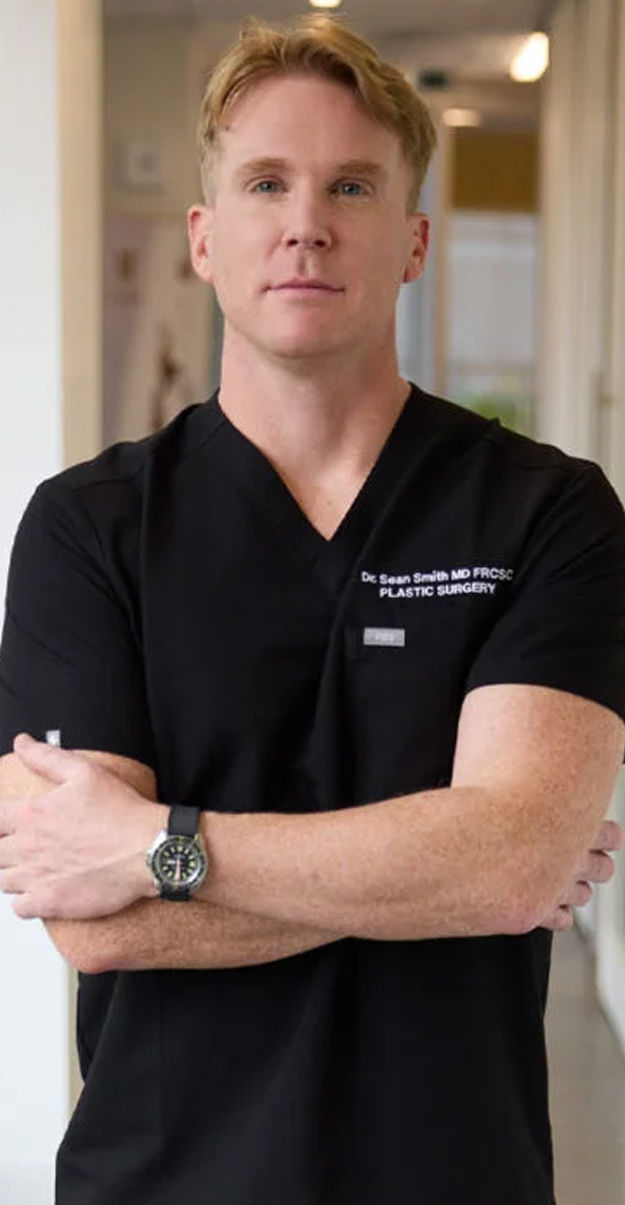
Dr. Smith
Your satisfaction involves more than a fee. When choosing a plastic surgeon for Non-surgical Fillers, remember that the surgeon's experience and your comfort with him or her is just as important as the final cost of the surgery.
Plastic surgery involves many choices. The first and most important is selecting a Plastic Surgeon you can trust. Plastic Surgeons such as Dr. Smith, certified by the Royal College of Physicians and Surgeons of Canada meet rigorous standards:
Board certification by Royal College of Physicians and Surgeons of Canada®
Completed five years of surgical training following medical school
Pass comprehensive oral and written exams
Complete continuing medical education, including patient safety
Perform surgery in accredited hospitals and surgical facilities
Following Dr. Smith’s Plastic Surgery residency, he completed an extra year of training, completing two additional clinical Fellowships to further his expertise in the field of Plastic Surgery. Please see his biography for more details.
Do not be confused by other official sounding boards and certifications. Be sure to choose a highly trained plastic surgeon who is board-certified by the American Board of Plastic Surgeons or The Royal College of Physicians and Surgeons of Canada.
This procedural information is intended strictly for educational purposes. Only models are depicted in these procedural information pages. It is not intended to make any representations or warranties about the outcome of any procedure. It is not a substitute for a thorough, in-person consultation with Dr. Smith.

What structural support may address
Strategic dermal filler may help address:
Loss of foundational support in key facial areas
Imbalance between facial regions
Volume-related changes that affect harmony
Fatigue-related changes rather than isolated lines
Every recommendation is individualized and anatomy-driven.
About results
Results from structural filler treatment are intended to be subtle, balanced, and integrated.
The goal is not to look filled or altered, but to restore support so facial features sit naturally and cohesively over time.
A considered care experience
Care is delivered in a calm, private, and unhurried environment.
Patients are supported with honest guidance, conservative recommendations, and a long-term perspective, without pressure, packages, or routine schedules.
Moving forward
Choosing injectable treatment is a personal and considered decision.
A private consultation provides the time and space to determine whether dermal filler is appropriate for you and to discuss options carefully, without obligation.


Real Stories. Real Transformations.
Rhinoplasty 5.0/5 — May 12, 2022 I highly recommend Dr. Smith for anyone considering a rhinoplasty. I am currently 8 weeks post op and I'm thrilled with my results so far. I have nothing but good things to say about Dr. Smith and his team at The Ottawa Clinic. Throughout the entire process, Dr. Smith has been compassionate, genuine and so attentive. He is very easy to talk to and listens patiently to my questions and concerns. He has always been on time, I've never felt rushed during appointments, and his Patient Care Coordinator, Sarah, is extremely pleasant to deal with. The recovery itself was relatively easy, although I was quite bruised and swollen. I experienced mild discomfort, but never felt any pain. The process was not as bad as I had anticipated - I only wish I had done it years ago!! I was looking for a very natural nose and my results are above and beyond what I had hoped for. Dr. Smith is a very skilled surgeon and I'm so thankful I found him. I can't recommend him enough!
Breast Augmentation 5.0/5 — August 18, 2025 Dr. Smith is absolutely amazing, he is the most skilled surgeon in Ottawa and along with that he also has great bedside manner. I met a few surgeons for consults before I met Dr. Smith, for my breast augmentation. None of them were as thorough, knowledgable, kind, or positive as he was. From our first consult I knew I wanted him to be my surgeon. His team is also AMAZING. They are supportive, quick to respond and they help you through the whole process, before and after. I am almost 3 months post surgery now and I couldn’t have dreamed of better results. He gave me exactly what I wanted. I can’t recommend him enough, he is the best surgeon in Ottawa hands down!!!
Upper and Lower Blepharoplasty 5.0/5 — November 22, 2024 Dr. Smith is an excellent surgeon and has a great personality. I had blepharoplasty ( upper and lower eyelid) and after couple of weeks it looked really good and even better now after two months. Dr Smith is knowledgeable and well skilled and make you at ease and answers all your questions and concerns. Him and his team ( Sarah) and others are all professional and very pleasant. I highly recommend Dr Smith for any of your plastic surgery needs. I’m planning for another procedure next year.
Deep Plane Facelift 5.0/5 — April 4, 2025 Dr. Smith is an exceptional surgeon. physician. He and his staff are professional, kind and caring. He performed a deep plane face lift for me just two weeks ago and I am already so pleased with the results. 10 out of 10 rating for Dr. Smith.
Breast Augmentation 5.0/5 — December 21, 2023 Dr. Smith is an exceptional cosmetic surgeon who has truly transformed my life through his remarkable skill and expertise. I recently underwent a breast augmentation procedure under his care, and I couldn't be more thrilled with the results. From the initial consultation to the post-operative care, Dr. Smith demonstrated the utmost professionalism and compassion. He took the time to thoroughly understand my goals and concerns, and he provided me with clear and realistic expectations for the procedure. His attention to detail and commitment to patient satisfaction were evident at every stage of the process. The surgical outcome exceeded my expectations in every way. Not only did Dr. Smith achieve beautiful, natural-looking results, but he also ensured that my safety and comfort were prioritized throughout the entire experience. His expertise and precision are truly unmatched. Furthermore, the entire staff of Dr. Smith provided outstanding support and care, making the entire experience seamless and comfortable. I felt well-informed, supported, and empowered throughout the entire journey, thanks to the exceptional team led by Dr. Smith. I wholeheartedly recommend Dr. Smith to anyone considering cosmetic surgery. His talent, integrity, and genuine concern for his patients make him a true standout in his field. I am immensely thankful for the beautiful results and the exceptional care I received, and I am confident that anyone who chooses Dr. Smith will be in the best of hands.
Abdominoplasty / Tummy Tuck 5.0/5 — October 22, 2021 I went to Dr. Sean Smith for an abdominoplasty (tummy tuck), I cannot be more thrilled with the results! From start to finish, he and his team made me feel comfortable with no pressure at all. Both the clinic and the private surgery location are clean and modern with ample free parking. About me, after the delivery of two children, I felt self-conscious of my body especially the abdominal pouch that hung over my waist. Even through eating healthy and exercising there was no way that the extra skin and sag would ever disappear naturally. I hated the way that my belly would be exposed in yoga classes to the point that I didn’t want to go the gym or even bother to exercise anymore – it felt pointless. I felt ashamed of my body and would make excuses to my kids why I didn’t want to go swimming, and felt disgusted with my appearance in photos. I would hide myself in loose-fitting baggy clothing and that made me feel even worse emotionally. Cosmetic surgery always seemed to me about the rich and famous. Something for extremely vain people, and I thought it was a waste of money. I can assure you that this is not the case. I made the decision to book a consultation with The Ottawa Clinic and it has literally changed my perspective and mental health. Dr. Smith started the conversation by assessing my expectations and assuring me that I was a good candidate for the procedure. He was kind and patient with all of my questions and concerns. Sarah, the Patient Care Coordinator, was also extremely responsive and helpful for all of the administrative details regarding my procedure. The surgery itself was done at the Gatineau location, which is an easy drive from Ottawa. I was understandably nervous, but all of the supportive personnel made me feel more relaxed. Dr. Smith was excited and enthusiastic and again made me feel at ease and comfortable with the decision to proceed. It has now been over six weeks since the surgery and I am so happy! I feel confident in my body in a way that hasn’t happened since my early 20s. I look at myself and I feel good and am excited to start a new exercise regime. I can’t wait for the summer to go swimming with my kids – and not just any bathing suit it’s a bikini! In the meantime, I’m happy walking around the house in crop tops! This surgery isn’t about vanity, it’s about your mental health and feeling good about yourself. My only regret is that I waited so long to make that call to Dr. Smith. I highly recommend his services.
Rhinoplasty 5.0/5 — April 1, 2023 In the summer of 2022 I met with Dr.Smith to inquire about rhinoplasty surgery. I was curious and equally nervous about proceeding. It was not until I met with Dr.Smith that I felt confident and safe in my decision to proceed. Dr. Smith met my questions with his own questions so that there was a complete understanding of what I wanted to achieve from this surgery and what I should expect. And he exceeded my expectations!!! In November 2022 I had my surgery. I am three months post opt and I feel INCREDIBLE! And it looks INCREDIBLE! The bridge of my nose is smooth, the tip is softer and of course my nose is smaller. And yet the change is some how subtle. Which is what I wanted . I still look like ME! This was a large concern of mine because I didn’t want to look like a different person. Or over done for that matter. The day my cast was removed I was reminded that I would not see the final results until a year but I was struck with joy when I seen my nose for the first time. There was swelling and a small scar but I could still clearly see what changes had been made and where my recovery was as headed. I am amazed. Truly a dream come true. I highly recommend Dr. Smith for any of your cosmetic needs. He is incredibly talented, professional and kind.
Mommy Makeover 5.0/5 — July 24, 2026 Choosing Dr. Sean Smith for my mommy makeover was one of the best decisions I’ve ever made. From my very first consultation, I knew I was in the right place. Dr. Smith was patient, honest, and took the time to understand exactly what I was hoping to achieve. He explained every part of the procedure thoroughly and made me feel comfortable and confident moving forward. My surgery included a tummy tuck, liposuction, and a breast lift with implants. Going into surgery, I expected the recovery to be difficult, but it turned out to be much easier than I had imagined. I experienced very little pain, had no complications whatsoever, and my healing process was smooth from beginning to end. The level of care I received before and after surgery was exceptional, and I always felt supported by Dr. Smith and his wonderful team. After losing 35 pounds, I had accomplished something I was incredibly proud of, but I still wasn’t happy with the changes my body had gone through. Dr. Smith helped me complete that journey. The results are beyond anything I had hoped for. My abdomen is beautifully contoured, my breasts look natural and balanced, and everything fits my body perfectly. What stands out most is Dr. Smith’s attention to detail. He doesn’t just perform surgery—he creates results that look elegant, natural, and personalized to each patient. His confidence, experience, and genuine care gave me complete peace of mind throughout the entire process. I am incredibly grateful to Dr. Smith and his entire team for making this such a positive experience. They exceeded my expectations in every way, and I wouldn’t hesitate to recommend them to anyone considering cosmetic surgery. If I had to make the decision again, I would choose Dr. Smith without a second thought.
Breast Augmentation 5.0/5 — April 19, 2024 I had breast augmentation with Dr. Sean Smith, and I am extremely happy with the results. After 8 weeks post-surgery, I can confidently say he is professional and his work is beyond perfect. The pain level was minimal, only 2 out of 10, and my recovery took just 5 days before I was back to work. My breasts are symmetric, and I love the stitches—no scars or pigmentation issues. I highly recommend Dr. Smith for his exceptional skills and care!

CONTACT DR. SMITH
Dr. Smith is located in Ottawa's West End. Our office features ground-level entry and offers abundant parking. Over 500 free parking spots are available.
For Ottawa appointment inquiries, please use the form.