
Gynecomastia in Ottawa
Gynecomastia: Male Breast Reduction
What is gynecomastia surgery?
Male breast reduction treats lasting chest fullness. This may involve breast gland, fat, loose skin, or a mix. At your Ottawa consultation, Dr. Sean C. Smith reviews your health, medicines, chest shape and goals.
New or changing breast symptoms need a medical assessment before cosmetic surgery.
Liposuction or gland removal?
-
Liposuction removes fat.
-
Firm breast gland or excess skin may need surgical removal.
-
Some patients need both approaches.
Nipple position, skin elasticity and chest symmetry also guide the plan. The aim is a more balanced chest contour. Surgery does not promise muscle definition.
What should I ask about recovery?
Discuss compression, wound care, work, chest exercise and lifting limits. Risks include scars, bleeding, fluid collections, changes in nipple sensation, uneven shape and possible further surgery. Your care instructions depend on the procedure and how you heal.
How much does gynecomastia surgery cost?
Your quote depends on the tissue and skin treatment, anesthesia, facility care and any combined procedures. Ask for a written quote that lists included care, taxes and follow-up.
Explore liposuction for men · View surgery fees and financing
Explore gynecomastia before-and-after cases: Case 1 · Case 2 · Case 3.
Request a gynecomastia consultation in Ottawa to discuss your options with Dr. Smith.
Who may consider male chest rebalancing surgery
This procedure may be appropriate for individuals who:
Experience persistent fullness or excess tissue in the chest
Feel self-conscious in fitted clothing or athletic settings
Have a stable weight, but notice chest disproportion
Are seeking normalization rather than dramatic definition
Value privacy, discretion, and realistic outcomes
Gynecomastia surgery is not intended for those seeking extreme muscular definition or cosmetic exaggeration.


Our surgical approach
Each gynecomastia plan is developed as a surgical strategy, not a standardized technique.
Careful assessment of glandular tissue, fat distribution, skin quality, and chest contour guides every recommendation. Treatment may involve tissue excision, liposuction, or a combination, selected conservatively to restore balance while minimizing visible signs of surgery.
The objective is a natural male chest contour that does not draw attention.
What this procedure may address
Male chest rebalancing surgery may help address:
Excess glandular tissue or fat in the chest
Asymmetry or irregular contour
Disproportion between the chest and the rest of the torso
Physical or emotional discomfort related to chest appearance
Every surgical plan is individualized and based on anatomy rather than ideals of physique.
Frequently Asked Questions (FAQ)
A clear, respectful framework for male chest concerns
Concerns about the male chest are common and often misunderstood. Many men are told they “just need liposuction,” while others are incorrectly labeled as having gynecomastia.
The reality is that gynecomastia surgery and chest liposuction address different anatomical issues. Choosing the correct approach is essential for achieving a natural, masculine result and avoiding disappointment.
This guide exists to clarify the difference, calmly, accurately, and without pressure.
How we frame the decision
Every recommendation begins with three foundational questions:
-
Is the fullness caused primarily by fat, glandular tissue, or both?
-
How does the chest relate proportionally to the shoulders, abdomen, and waist?
-
What approach will restore a natural male chest contour over time?
The goal is not aggressive flattening, but appropriate chest balance.
Chest Liposuction
What chest liposuction addresses
Chest liposuction removes localized fat from the chest area. It is designed to refine contour when fatty tissue is the primary contributor to fullness.
Chest liposuction does not remove glandular breast tissue.
When chest liposuction may be appropriate
Chest liposuction may be appropriate when:
-
Fullness is soft and fatty in nature
-
Weight is stable
-
There is no firm gland beneath the nipple
-
Skin quality is good
-
The chest contour improves when lying flat
In these cases, liposuction alone may restore a flatter, more proportional chest.
Limitations of chest liposuction
Liposuction alone may be insufficient when:
-
Firm glandular tissue is present
-
The nipple area remains prominent despite fat removal
-
There is significant tissue density beneath the areola
Removing fat alone in these situations may leave residual fullness or contour irregularity.
Gynecomastia Surgery
What gynecomastia surgery addresses
Gynecomastia surgery removes glandular breast tissue, often in combination with fat removal when appropriate.
It is designed to correct true gynecomastia, a condition characterized by firm breast tissue beneath the nipple-areolar complex.
When gynecomastia surgery may be appropriate
Gynecomastia surgery may be appropriate when:
-
There is firm or rubbery tissue beneath the nipple
-
The nipple area appears puffy or protruding
-
Chest fullness does not resolve with weight loss
-
The contour does not flatten when lying down
In these cases, glandular excision is necessary to restore a masculine chest contour.
Considerations with gynecomastia surgery
Gynecomastia surgery:
-
Requires careful tissue excision
-
May involve a small incision at the areola
-
Focuses on contour, not excessive flattening
-
Is planned conservatively to avoid indentation or scarring
-
Not all male chest fullness is the same
When men seek surgery for chest fullness, the assumption is often that the problem is simply excess fat. In reality, male chest enlargement may involve fat, glandular tissue, or both.
Understanding the difference is essential. The type of tissue present determines the surgical approach and influences long-term contour stability.
Dr. Smith evaluates each case carefully before recommending treatment.
Fat: soft and diffuse fullness
Adipose tissue (fat) is soft and typically distributed more broadly across the chest.
Chest fullness related primarily to fat may:
-
Fluctuates with weight changes
-
Feel soft to the touch
-
Improve partially with weight loss
In these cases, liposuction can reduce excess volume and refine contour.
However, liposuction alone does not address firm glandular tissue.
Gland: dense and central tissue
True gynecomastia involves enlargement of glandular breast tissue beneath the nipple–areola complex.
Glandular tissue:
-
Feels firm or rubbery
-
Is typically concentrated beneath the areola
-
Does not resolve with diet or exercise
-
May be influenced by hormonal factors
Because the gland is dense, it cannot be removed effectively with liposuction alone. Direct excision is often required to achieve a flat, balanced contour.
Why diagnosis matters
Treating glandular gynecomastia with liposuction alone may leave persistent central fullness. Conversely, removing only the gland without contouring the surrounding fat may create irregularity or indentation.
Accurate diagnosis allows for a tailored plan that may include:
-
Liposuction for contour refinement
-
Direct gland excision
-
Or a combination of both
The goal is smooth, proportionate chest rebalancing, not simply tissue removal.
Hormonal and medical considerations
In certain patients, evaluation for underlying hormonal causes or medication-related changes may be appropriate. Ensuring stability before surgery reduces the risk of recurrence.
Surgical correction is most predictable when the underlying cause has been addressed or stabilized.
A balanced surgical approach
Dr. Smith approaches male chest rebalancing with attention to contour transitions, nipple–areola position, and long-term proportion. Removing too much tissue can create a concavity. Removing too little can leave residual fullness.
Precision and restraint are essential.
Final perspective
Gynecomastia surgery is not simply about removing fat. It is about identifying the specific tissues responsible for chest fullness and correcting them appropriately.
By distinguishing between fat and gland, and often addressing both, Dr. Smith creates natural, stable chest contours that integrate seamlessly with the surrounding anatomy.
A private consultation allows for careful assessment to determine which tissues are contributing to your concern and how best to correct them.
-
Chest contour is defined at the center
In male chest rebalancing surgery, attention often focuses on removing excess tissue. Equally important, however, is the position and proportion of the nipple–areola complex.
The nipple–areola complex (NAC) sits at the visual center of the chest. Its size, projection, and placement strongly influence whether the result appears natural and masculine.
Dr. Smith evaluates the NAC position and contour as carefully as tissue removal.
Areolar diameter and proportion
Enlarged or stretched areolae are common in gynecomastia.
Excess glandular tissue beneath the areola can cause:
-
Widening of the areolar diameter
-
Forward projection or “puffiness.”
-
Central chest prominence
When appropriate, areolar reduction or tightening techniques may be incorporated to restore proportion. The goal is a diameter that harmonizes with the overall chest width, not an artificially small or overly tight appearance.
Projection and central fullness
A persistent gland beneath the nipple can create a protruding or rounded contour even after the surrounding fat is reduced.
Careful excision of glandular tissue allows the nipple–areola complex to sit flatter and more integrated with the pectoral contour.
Over-resection, however, can create:
-
Indentation
-
Adherence to deeper tissue
-
Irregular contour during movement
Precision and restraint are essential.
Position on the chest wall
The masculine chest typically demonstrates:
-
A stable, slightly lateral nipple position
-
Balanced vertical placement relative to the pectoral muscle
-
Symmetry without artificial rigidity
Significant skin laxity or weight loss may alter the position of the nipple. In selected cases, repositioning techniques may be discussed. However, any intervention must weigh contour improvement against scar trade-offs.
Transition from chest to abdomen
A masculine chest shape is not isolated to the nipple itself. The transition from the lower border of the pectoral region to the upper abdomen contributes to overall contour.
Over-aggressive tissue removal can create an unnatural concavity beneath the areola or a sharp step-off between chest and abdomen.
Dr. Smith prioritizes smooth transitions and a natural chest slope.
Athletic vs natural contour
Not every man desires a highly sculpted, athletic chest. Some seek subtle flattening that restores comfort and confidence without exaggerated definition.
The nipple–areola complex should integrate seamlessly into the chest, neither projecting nor appearing surgically altered.
Treatment planning is individualized based on body type, skin quality, and personal goals.
A structural philosophy
Male chest rebalancing is not simply about removing tissue. It is about restoring proportion across the entire pectoral region.
Dr. Smith evaluates:
-
Tissue composition (fat vs gland)
-
Areolar diameter
-
Nipple projection
-
Skin elasticity
-
Chest width and muscular contour
This comprehensive assessment allows for precise correction while avoiding overcorrection.
Final perspective
The nipple–areola complex plays a defining role in masculine chest shape. Balanced size, position, and projection are essential for natural-looking results.
By thoughtfully addressing both tissue removal and central contour, Dr. Smith creates stable, proportionate chest rebalancing outcomes that feel natural in motion and at rest.
A private consultation allows for a detailed assessment of chest anatomy to determine the most appropriate surgical strategy.
-
Skin behavior matters in male chest rebalancing
In gynecomastia surgery, removing excess fat and gland is only part of the equation. Skin elasticity plays a significant role in determining the final contour.
One of the most common concerns men have is whether loose skin will remain after tissue removal. The answer depends on age, skin quality, the degree of enlargement, and whether the patient has experienced a significant weight loss.
Dr. Smith evaluates skin behavior carefully before recommending additional tightening procedures.
When skin retracts naturally
In many patients, particularly younger men with good skin elasticity, the skin contracts naturally after gland and fat removal.
Favorable characteristics include:
-
Good overall skin tone
-
Mild to moderate enlargement
-
Stable weight
-
No significant stretch marks
In these cases, the skin often adapts gradually over several months without requiring excision.
Time is an important part of the contouring process.
When skin laxity becomes a concern
More significant chest enlargement, major weight loss, or reduced elasticity with age may limit natural retraction.
Signs that skin tightening may be necessary include:
-
Visible sagging of the nipple–areola complex
-
Redundant lower chest skin
-
Significant stretch marks
In these cases, tissue removal alone may not produce a balanced contour.
Surgical skin tightening options
When appropriate, skin tightening techniques may involve:
-
Periareolar skin reduction
-
Limited excisional approaches
-
Repositioning of the nipple–areola complex in selected cases
Each technique involves trade-offs, particularly regarding scar placement.
Careful planning is required to balance contour improvement with scar visibility.
The scar trade-off
More aggressive skin excision can improve contour but increases scar length and visibility.
Dr. Smith discusses these trade-offs clearly. Some patients prefer accepting mild residual laxity to avoid additional scarring. Others prioritize a tighter contour despite longer scars.
The decision is individualized and guided by anatomy and personal preference.
Healing and patience
Skin retraction and scar maturation continue for several months after surgery.
Early swelling can obscure the final contour. Judging skin tightness too soon may create unnecessary concern. Ongoing follow-up ensures proper healing and adjustment.
A balanced approach
Skin tightening is recommended only when necessary.
Dr. Smith prioritizes conservative correction whenever possible, allowing the body’s natural elasticity to contribute to the final result. When excision is required, it is planned carefully to preserve proportion and minimize visible scarring.
Final perspective
Skin tightening in the male chest rebalancing is not automatic. It depends on tissue characteristics, the severity of enlargement, and long-term goals.
By thoughtfully evaluating skin behavior and openly discussing scar trade-offs, Dr. Smith develops surgical plans that prioritize durable contour and natural masculine proportion.
A private consultation allows for careful assessment of skin quality and discussion of whether tightening procedures are appropriate in your case.
-
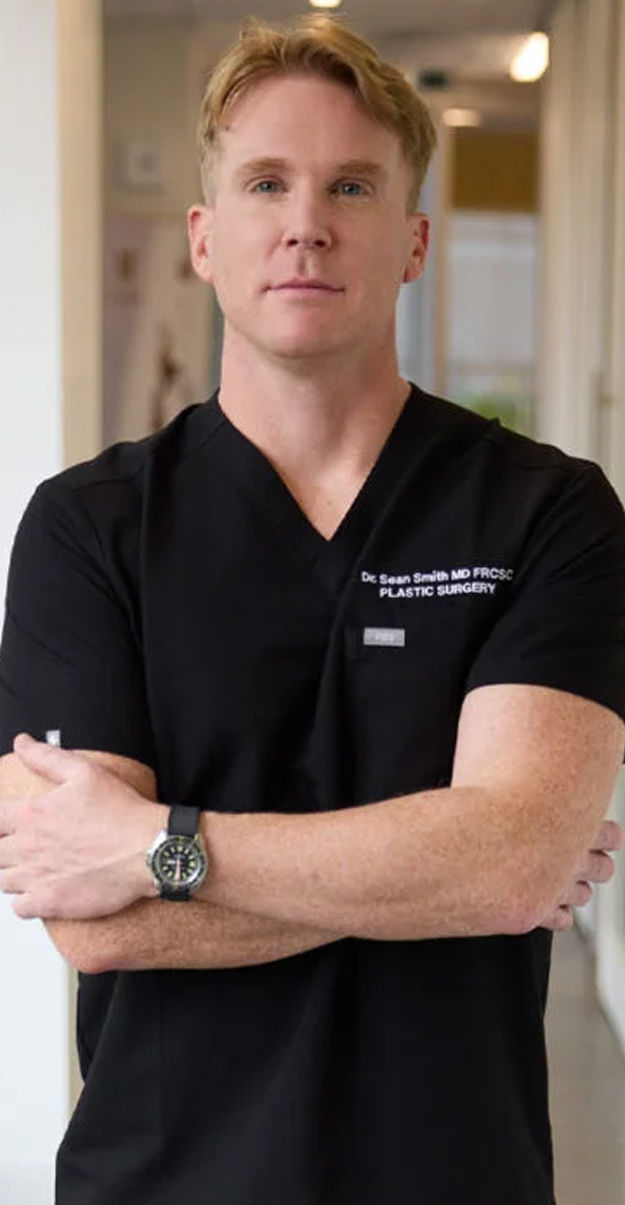
Dr. Smith
Your satisfaction involves more than a fee. When choosing a plastic surgeon for Gynecomastia, remember that the surgeon's experience and your comfort with him or her is just as important as the final cost of the surgery.
Plastic surgery involves many choices. The first and most important is selecting a Plastic Surgeon you can trust. Plastic Surgeons such as Dr. Smith, certified by the Royal College of Physicians and Surgeons of Canada meet rigorous standards:
Board certification by Royal College of Physicians and Surgeons of Canada®
Completed five years of surgical training following medical school
Pass comprehensive oral and written exams
Complete continuing medical education, including patient safety
Perform surgery in accredited hospitals and surgical facilities
Following Dr. Smith’s Plastic Surgery residency, he completed an extra year of training, completing two additional clinical Fellowships to further his expertise in the field of Plastic Surgery. Please see his biography for more details.
Do not be confused by other official sounding boards and certifications. Be sure to choose a highly trained plastic surgeon who is board-certified by the American Board of Plastic Surgeons or The Royal College of Physicians and Surgeons of Canada.
This procedural information is intended strictly for educational purposes. Only models are depicted in these procedural information pages. It is not intended to make any representations or warranties about the outcome of any procedure. It is not a substitute for a thorough, in-person consultation with Dr. Smith.

Recovery and considerations
All surgery involves healing, swelling, and temporary changes in sensation.
Gynecomastia surgery requires commitment to recovery and compression support. Incisions are placed discreetly, and patients are guided through healing with clear expectations, attentive follow-up, and thoughtful support.
Recovery timelines and activity guidance are discussed in detail during consultation.
About results
Results from gynecomastia surgery are intended to be natural, proportional, and enduring.
The goal is not a sculpted or artificial appearance, but a chest that feels aligned with the rest of the body and allows confidence without self-consciousness.
A considered surgical experience
From consultation through recovery, care is delivered in a calm, private, and unhurried environment.
Patients are supported with honest guidance, thoughtful planning, and consistent follow-up, without pressure to proceed.
Moving forward
Choosing male chest surgery is a personal and considered decision.
A private consultation provides the time and space to explore whether gynecomastia surgery is appropriate for you and to discuss options carefully, without obligation.


Rhinoplasty 5.0/5 — May 12, 2022 I highly recommend Dr. Smith for anyone considering a rhinoplasty. I am currently 8 weeks post op and I'm thrilled with my results so far. I have nothing but good things to say about Dr. Smith and his team at The Ottawa Clinic.
Breast Augmentation 5.0/5 — August 18, 2025 Dr. Smith is absolutely amazing, he is the most skilled surgeon in Ottawa and along with that he also has great bedside manner. I met a few surgeons for consults before I met Dr. Smith, for my breast augmentation. None of them were as thorough, knowledgable, kind, or positive as he was. From our first consult I knew I wanted him to be my surgeon. …
Upper and Lower Blepharoplasty 5.0/5 — November 22, 2024 Dr. Smith is an excellent surgeon and has a great personality. I had blepharoplasty ( upper and lower eyelid) and after couple of weeks it looked really good and even better now after two months. Dr Smith is knowledgeable and well skilled and make you at ease and answers all your questions and concerns. …
Deep Plane Facelift 5.0/5 — April 4, 2025 Dr. Smith is an exceptional surgeon. physician. He and his staff are professional, kind and caring. He performed a deep plane face lift for me just two weeks ago and I am already so pleased with the results. 10 out of 10 rating for Dr. Smith.
Breast Augmentation 5.0/5 — December 21, 2023 Dr. Smith is an exceptional cosmetic surgeon who has truly transformed my life through his remarkable skill and expertise. I recently underwent a breast augmentation procedure under his care, and I couldn't be more thrilled with the results. From the initial consultation to the post-operative care, Dr. Smith demonstrated the utmost professionalism and compassion. …
Abdominoplasty / Tummy Tuck 5.0/5 — October 22, 2021 I went to Dr. Sean Smith for an abdominoplasty (tummy tuck), I cannot be more thrilled with the results! From start to finish, he and his team made me feel comfortable with no pressure at all. Both the clinic and the private surgery location are clean and modern with ample free parking. …
Rhinoplasty 5.0/5 — April 1, 2023 In the summer of 2022 I met with Dr.Smith to inquire about rhinoplasty surgery. I was curious and equally nervous about proceeding. It was not until I met with Dr.Smith that I felt confident and safe in my decision to proceed. …
Mommy Makeover 5.0/5 — July 24, 2026 Choosing Dr. Sean Smith for my mommy makeover was one of the best decisions I’ve ever made. From my very first consultation, I knew I was in the right place. Dr. Smith was patient, honest, and took the time to understand exactly what I was hoping to achieve. He explained every part of the procedure thoroughly and made me feel comfortable and confident moving forward. …
Breast Augmentation 5.0/5 — April 19, 2024 I had breast augmentation with Dr. Sean Smith, and I am extremely happy with the results. After 8 weeks post-surgery, I can confidently say he is professional and his work is beyond perfect. The pain level was minimal, only 2 out of 10, and my recovery took just 5 days before I was back to work. …

CONTACT DR. SMITH
Dr. Smith is located in Ottawa's West End. Our office features ground-level entry and offers abundant parking. Over 500 free parking spots are available.
For Ottawa appointment inquiries, please use the form.