
Facial Fat Transfer
Facial Fat Transfer: Volume and Contour
Facial fat transfer uses your own fat to add volume to selected areas of your face. Dr. Smith takes fat from another area of your body with liposuction.
Planning your treatment
At your Ottawa consultation, Dr. Smith will assess your skin, facial shape, and the areas that have lost volume. Fat transfer and fillers can add volume. A facelift can lift loose tissue. Your examination will help guide the choice.
Healing and results
Your body absorbs some of the transferred fat as you heal. Your results will become clearer as swelling goes down. Weight changes can affect the result. Some patients may consider another treatment.
Fees, recovery and risks
Both the face and the area that supplies the fat need time to heal. We will review swelling, uneven shape, infection, and risks to blood vessels. We will also discuss activity, follow-up, and your written quote.
Who may consider facial volume rebalancing?
This procedure may be appropriate for individuals who:
Notice loss of facial volume that affects balance or contour
Feel the face appears less supported over time
Are concerned about hollowing rather than surface wrinkles
Are seeking subtle restoration rather than visible filling
Value natural-looking outcomes and restraint
Facial fat transfer is not intended for those seeking dramatic fullness, exaggerated contouring, or trend-driven facial aesthetics.


Our surgical approach
Each facial fat transfer plan is developed as a surgical strategy, not a standardized technique.
Careful assessment of facial structure, volume distribution, skin quality, and overall harmony guides every recommendation. Fat is harvested, prepared, and placed conservatively to restore support while preserving natural facial movement and expression.
Overfilling is intentionally avoided. The goal is integration, allowing volume to support the face quietly rather than draw attention to itself.
What this procedure may address
Facial volume rebalancing may help address:
Hollowing of the cheeks, temples, or under-eye region
Loss of soft tissue support
Disruption in facial balance
Volume-related changes that contribute to a tired appearance
Every surgical plan is individualized and based on anatomy rather than trends or cosmetic ideals.
Frequently Asked Questions (FAQ)
Aging is not just about “losing volume”
Patients often describe facial aging as looking hollow or deflated. While volume loss does occur over time, it is only one part of the aging process.
Equally important is volume descent, the downward movement of tissue due to ligament laxity, structural changes, and gravity.
Understanding the difference between loss and descent is essential before deciding whether facial fat transfer is appropriate.
Volume loss: deflation
True volume loss occurs when fat diminishes in specific facial compartments.
Common areas include:
-
Temples
-
Midface and upper cheeks
-
Around the eyes
-
Perioral region
This type of change creates hollowness, shadowing, and reduced structural support.
Facial fat transfer is designed to restore this lost volume by replacing what has diminished.
Volume descent: downward movement
Volume descent occurs when existing tissue shifts lower on the face rather than disappearing.
This may present as:
-
Jowling
-
Deepened nasolabial folds
-
Heaviness in the lower face
-
Loss of jawline definition
In these cases, the issue is not the absence of volume; it is displacement.
Adding volume to descended tissue without repositioning it can create heaviness and imbalance.
Why the distinction matters
Treating descent with volume alone may result in:
-
Overfilling
-
Distorted contours
-
A heavier or rounded appearance
-
Short-term improvement but long-term dissatisfaction
Conversely, ignoring true volume loss can leave a face appearing under-supported even after lifting procedures.
Correct diagnosis determines the appropriate intervention.
When fat transfer is most appropriate
Facial fat transfer is often well-suited for:
-
Hollow temples
-
Midface deflation
-
Tear trough support (in carefully selected cases)
-
Global soft tissue thinning
In these scenarios, replacing lost tissue restores balance and naturally softens shadowing.
When lifting may be necessary first
If descent is the primary issue, structural repositioning, such as a deep plane facelift, may be more appropriate.
Repositioning tissue before adding volume often produces more harmonious and durable results.
In some patients, a combined approach of lift and conservative fat transfer creates optimal balance.
A structural philosophy
Dr. Smith approaches facial aging diagnostically rather than symptomatically.
The goal is not simply to “add volume,” but to determine whether tissue has been lost, shifted, or both.
By distinguishing between volume loss and volume descent, facial fat transfer can be used thoughtfully to restore support where needed without creating excess.
Final perspective
Facial fat transfer is a powerful tool when applied to the correct problem.
Replacing lost volume can restore softness and structural support. Attempting to correct descent solely with volume, however, may compromise long-term balance.
A private consultation allows for careful assessment of facial anatomy to determine whether volume restoration, structural lifting, or a combined approach is most appropriate.
-
Aging is not a single problem
Facial aging involves multiple structural changes occurring at different levels of the face. Volume loss, tissue descent, ligament laxity, and skin changes all contribute, but not equally in every patient.
Understanding whether aging is primarily a problem of deflation or descent is critical before deciding between fat transfer and facelift surgery.
Dr. Smith evaluates these changes structurally rather than symptomatically.
What facial fat transfer corrects
Facial fat transfer is designed to restore volume that has diminished over time.
It is most effective for:
-
Hollow temples
-
Midface deflation
-
Tear trough support in select patients
-
Global soft tissue thinning
When true fat atrophy is present, replacing that volume can restore softness and support in a natural, biological way.
Fat transfer does not reposition tissue that has descended.
What a facelift corrects
A facelift, particularly an extended deep plane facelift, addresses tissue descent.
Over time:
-
The midface shifts downward
-
The jawline loses definition
-
Jowls develop
-
The neck softens
These changes are not caused by a missing volume. They are caused by structural movement.
A deep plane facelift repositions deeper tissue layers to restore natural elevation and contour. It does not rely solely on tightening skin.
Why can volume alone not replace lifting
Adding fat to tissue that has descended can:
-
Increase lower facial heaviness
-
Blur jawline definition
-
Accentuate jowls
-
Create a rounded or overfilled appearance
When descent is the primary issue, structural repositioning must come first.
Volume alone cannot lift.
When fat transfer alone may be appropriate
Fat transfer alone may be considered when:
-
The primary concern is hollowing rather than sagging
-
Jawline definition remains intact
-
Skin elasticity is relatively preserved
In these patients, restoring volume can provide meaningful improvement without the need for lifting.
When a facelift may be more appropriate
A facelift may be more appropriate when:
-
Jowls are present
-
The jawline is blurred
-
Neck contour has softened
-
Midface descent is visible
In these cases, repositioning tissue provides more durable and harmonious results than adding volume.
Combined approach: lift and restore
Many patients benefit from a combination of structural lifting and conservative fat transfer.
An extended deep plane facelift restores tissue position. Thoughtful fat grafting can then replace true volume loss and refine contour
-
Facial fat transfer is not simply “adding volume”
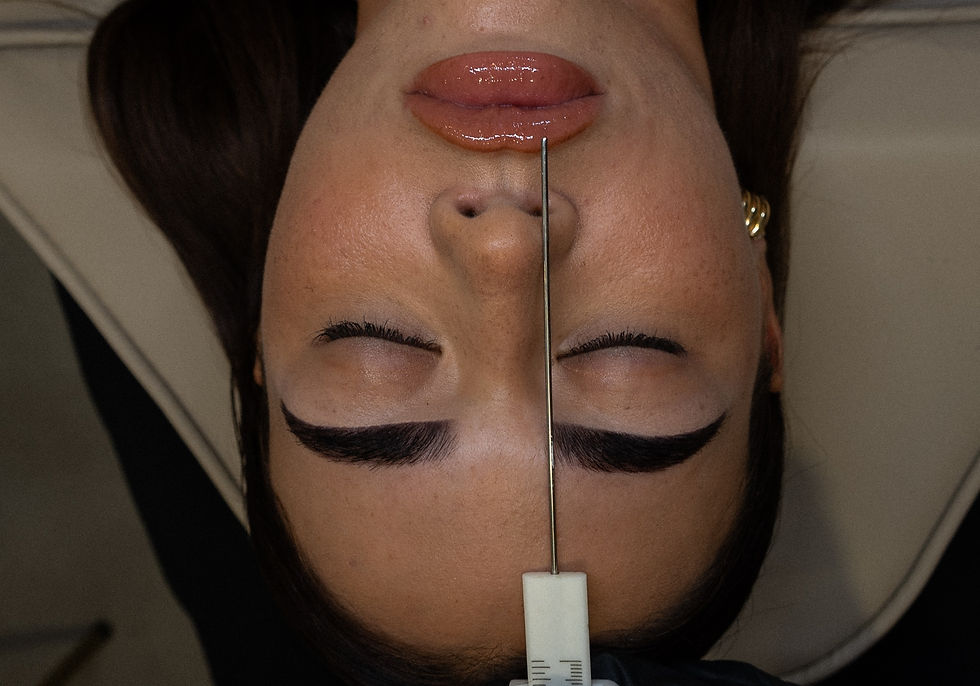
Unlike dermal fillers, transferred fat is living tissue. It must establish a new blood supply in order to survive. The long-term success of fat grafting depends less on the amount of fat injected and more on how it is handled, placed, and supported.
Technique determines survival.
Dr. Smith approaches facial fat transfer as a biologic procedure rather than a volumizing shortcut.
Fat survival depends on the blood supply
Once transferred, fat cells rely on the surrounding tissue for nourishment. If too much fat is placed in one area, the inner cells may not receive an adequate blood supply and can fail to survive.
This is why careful placement matters.
Successful grafting requires:
-
Small, precise parcels of fat
-
Even distribution
-
Placement into well-vascularized tissue planes
The goal is integration, not bulk.
Why does overfilling create problems?
Injecting excessive fat in a single session may seem appealing in the short term. However, overfilling increases the risk of:
-
Irregular contour
-
Prolonged swelling
-
Fat necrosis or firmness
-
Long-term heaviness
Because fat is living tissue, it cannot simply be “dissolved” like filler if too much is placed. Conservative planning protects long-term harmony.
Handling and processing matter
Fat must be harvested, purified, and reinjected gently.
Trauma during processing can reduce cell viability. Thoughtful handling preserves cell integrity and improves long-term retention.
Precision at every stage, harvesting, preparation, and placement, influences outcome quality.
Micro-structural placement
Rather than depositing large volumes in a single pocket, Dr. Smith uses micro-structural placement techniques. Fat is layered in fine threads across multiple planes to create natural support and contour.
This method:
-
Encourages stable integration
-
Maintains smooth surface contour
-
Reduces lumpiness
-
Preserves facial movement
The result is restoration, not inflation.
Swelling vs final result
Early after surgery, swelling may temporarily exaggerate volume. Final contour evolves gradually as swelling resolves and grafted fat stabilizes.
Judging results too early can be misleading. Patience is part of the biologic process.
Longevity and stability
Not all transferred fat survives. A portion typically resorbs during the healing phase. Once stabilized, surviving fat behaves like normal tissue, responding to aging and weight changes naturally.
Long-term planning considers both expected resorption and facial aging patterns.
A philosophy of restraint
Because fat is permanent once integrated, conservative placement is essential.
Dr. Smith prioritizes subtle restoration that supports structure without creating fullness that may age poorly. The objective is a durable balance, not immediate dramatic change.
Final perspective
Facial fat transfer is a biologic procedure requiring precision, patience, and restraint. Technique, not volume, determines long-term success.
By respecting fat as living tissue, Dr. Smith creates results that integrate naturally with facial anatomy and age gracefully over time.
A private consultation allows for individualized assessment to determine whether fat transfer is appropriate and how it can be applied conservatively and effectively.
-


Consultation and Preparing for Surgery
During your consultation be prepared to discuss:
Your surgical goals
Medical conditions, drug allergies, and medical treatments
Current medications, vitamins, herbal supplements, alcohol, tobacco, and drug use
Previous surgeries
Dr. Smith may also:
Evaluate your general health status and any pre-existing health conditions or risk factors
Discuss your facelift options
Examine and measure your face
Take photographs
Recommend a course of treatment
Discuss likely outcomes of fat transfer and any risks or potential complications

Prior to surgery, you may be asked to:
Get lab testing or a medical evaluation
Take certain medications or adjust your current medications
Stop smoking
Avoid taking aspirin, anti-inflammatory drugs, and herbal supplements as they can increase bleeding
Liposuction should be performed in an accredited office-based surgical facility, licensed ambulatory surgical center, or a hospital. Be sure to arrange for someone to drive you to and from surgery and to stay with you for at least the first night following surgery. Be sure to ask questions. It's very important to ask Dr. Smith questions about liposuction.
It's natural to feel some anxiety, whether it's excitement for your anticipated new look or a bit of preoperative stress. Don't be shy about discussing these feelings with Dr. Smith.
Recovery and considerations
All surgery involves healing, swelling, and gradual settling of results.
Facial fat transfer requires patience, as transferred fat integrates over time. Some degree of variability is expected, and outcomes evolve gradually. Patients are guided through recovery with clear expectations, attentive follow-up, and careful support.
Recovery timelines and activity guidance are discussed in detail during consultation.


About results
Results from facial fat transfer are intended to be subtle, balanced, and enduring.
The objective is not to make the face look fuller, but to restore continuity and support so that facial features appear cohesive and naturally supported over time.
A considered surgical experience
From consultation through recovery, care is delivered in a calm, private, and unhurried environment.
Patients are supported with honest guidance, thoughtful planning, and consistent follow-up, without pressure to proceed.
Moving forward
Choosing facial volume restoration is a personal and considered decision.
A private consultation provides the time and space to explore whether facial fat transfer is appropriate for you and to discuss options carefully, without obligation.
The Procedure
Fat transfer surgery may last between one to four hours, depending on the complexity of the procedure and whether an additional procedure is performed at the same time. Dr. Smith will meet you before surgery and carefully mark the areas where fat will be removed, and the areas where fat will be injected. These markings will be used as guidelines during the procedure.

Step 1
Anesthesia
Medications are administered for your comfort during the surgical procedure. The choices include local anesthesia, intravenous sedation, and general anesthesia. Dr. Smith will recommend the best choice for you.
Fat transfer may be performed under local anesthesia where only the surrounding area is numb. Alternatively, for procedures involving larger areas of the body, you may be asleep under general anesthesia. A special medicated fluid called tumescent fluid is injected into the areas that will be treated with liposuction. This fluid expands the tissues, to make it easier to remove fat cells, numbs the treatment area, and minimizes bleeding and bruising.

Step 2
Fat Harvest with liposuction
Dr. Smith will begin the procedure by using liposuction to harvest your fat. Excess fat is removed from areas of the body including the jowls, back, abdomen, thighs, and buttocks. Most body fat is located on top of muscle tissue, just beneath the skin. Liposuction works by surgically removing excess fat with a suction device, resulting in improved contours in the desired area
Liposuction is performed through small, inconspicuous incisions. First, diluted local anesthesia is infused to reduce bleeding and trauma.
Then a thin hollow tube, or cannula, is inserted through the incisions to loosen excess fat using a controlled back and forth motion. The dislodged fat is then suctioned out of the body using a surgical vacuum or syringe attached to the cannula.

Step 3
Fat transfer to the desired location
Dr. Smith will use a cannula to inject the fat cells into the desired location. Using a forward and backward motion, fat is slowly added in multiple areas until the desired volume and contour is achieved.

Step 4
Closure
The incisions may be closed with sutures or may be left open. Lastly, absorbent pads are applied to protect the incision sites as you heal.
Your improved body contour will be apparent once the swelling and fluid retention commonly experienced following liposuction subside. With continued practices of healthy diet and fitness, the loss of excess fatty tissue should be permanently maintained. However, substantial weight gain can alter the results.

Risks and Safety
The decision to have liposuction is extremely personal. You will have to decide if the benefits will achieve your goals and if the risks and potential complications are acceptable. You will be asked to sign consent forms to ensure that you fully understand the procedure and any risks and potential complications.
Dr. Smith will discuss risks such as cysts, infection, small mineral deposits called microcalcifications, and death of fat cells. You also may need to discuss options for future fat transfers as it may take more than one procedure to achieve your desired look.
The risks include:
Anesthesia risks
Bleeding
Change in skin sensation that may persist
Damage to deeper structures such as nerves, blood vessels, muscles, lungs, and abdominal organs
Fluid accumulation
Infection
Irregular contours or asymmetries
Need for revision surgery
Persistent swelling
Poor wound healing
Rippling or loose skin, worsening of cellulite
Swelling
These risks and others will be fully discussed prior to your consent. It is important that you address all your questions directly with Dr. Smith.

Recovery After Surgery
Most fat transfer procedures are completed in outpatient surgery facilities; you should be ready to go home the same day, usually within two to four hours.
Once your procedure is completed, a compression garment or elastic bandages may cover treatment areas. These help to control swelling and compress the skin to your new body contours.
You will be given specific instructions that may include how to care for the surgical site, medications to take orally to help manage your pain for the first few days, specific concerns to look for at the surgical site or in your general health, and when to follow up with Dr. Smith.
Be sure to ask Dr. Smith specific questions about what you can expect during your individual recovery period:
Where will I be taken after my surgery is complete?
What medication will I be given or prescribed after surgery?
Will I have dressings/bandages after surgery?
How long will I wear the compression garment?
Are stitches removed? When?
When can I resume normal activity and exercise?
When do I return for follow-up care?

Results
While you will most likely notice an improvement immediately after the procedure, final results will not be apparent until one year after surgery. You should have initial satisfaction with the size and shape of the fat transfer after surgery, however much of this is due to swelling and the results may diminish over time.
Although fat cells are removed permanently during the procedure, it is important to realize that fat transfer does not prevent growth of remaining fatty tissue. Additionally, fat cells injected into the desired area may disperse from the injected area. Your results may also change if you gain or lose weight.
With realistic expectations and proper maintenance, you may enjoy the results of your fat transfer procedure for years.
Your improved body contour will be apparent when the swelling and fluid retention commonly experienced following liposuction subside.
The results of liposuction will be long lasting, provided that you maintain a stable weight and general fitness. As your body ages, it is natural to lose some firmness, but most of your improvement should be relatively permanent.
Although good results are expected from your procedure, there is no guarantee. In some situations, it may not be possible to achieve optimal results with a single surgical procedure and another surgery may be necessary.
Following Dr. Smith’s instructions is essential to the success of your surgery. It's important that the surgical incisions are not subjected to excessive force, swelling, abrasion, or motion during the time of healing. Dr. Smith will give you specific instructions on how to care for yourself.

Cost
Prices for fat transfer procedures can vary. The cost will be based on the type of procedure required to address your specific needs. Dr. Smith does offer patient financing plans, so be sure to ask.
Cost may include:
Anesthesia fees
Hospital or surgical facility costs
Medical tests (if required)
Post-surgery garments (if required)
Surgeon's fee

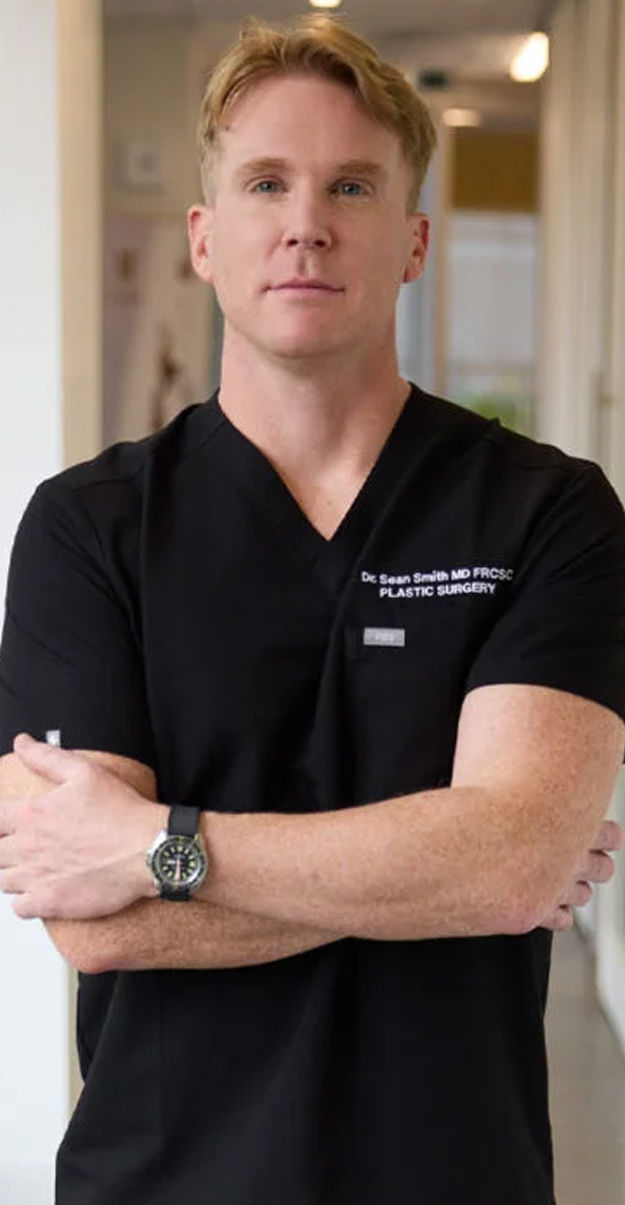
Dr. Smith
Your satisfaction involves more than a fee. When choosing a plastic surgeon for Face Fat Transfer, remember that the surgeon's experience and your comfort with him or her is just as important as the final cost of the surgery.
Plastic surgery involves many choices. The first and most important is selecting a Plastic Surgeon you can trust. Plastic Surgeons such as Dr. Smith, certified by the Royal College of Physicians and Surgeons of Canada meet rigorous standards:
Board certification by Royal College of Physicians and Surgeons of Canada®
Completed five years of surgical training following medical school
Pass comprehensive oral and written exams
Complete continuing medical education, including patient safety
Perform surgery in accredited hospitals and surgical facilities
Following Dr. Smith’s Plastic Surgery residency, he completed an extra year of training, completing two additional clinical Fellowships to further his expertise in the field of Plastic Surgery. Please see his biography for more details.
Do not be confused by other official sounding boards and certifications. Be sure to choose a highly trained plastic surgeon who is board-certified by the American Board of Plastic Surgeons or The Royal College of Physicians and Surgeons of Canada.
This procedural information is intended strictly for educational purposes. Only models are depicted in these procedural information pages. It is not intended to make any representations or warranties about the outcome of any procedure. It is not a substitute for a thorough, in-person consultation with Dr. Smith.

Rhinoplasty 5.0/5 — May 12, 2022 I highly recommend Dr. Smith for anyone considering a rhinoplasty. I am currently 8 weeks post op and I'm thrilled with my results so far. I have nothing but good things to say about Dr. Smith and his team at The Ottawa Clinic.
Breast Augmentation 5.0/5 — August 18, 2025 Dr. Smith is absolutely amazing, he is the most skilled surgeon in Ottawa and along with that he also has great bedside manner. I met a few surgeons for consults before I met Dr. Smith, for my breast augmentation. None of them were as thorough, knowledgable, kind, or positive as he was. From our first consult I knew I wanted him to be my surgeon. …
Upper and Lower Blepharoplasty 5.0/5 — November 22, 2024 Dr. Smith is an excellent surgeon and has a great personality. I had blepharoplasty ( upper and lower eyelid) and after couple of weeks it looked really good and even better now after two months. Dr Smith is knowledgeable and well skilled and make you at ease and answers all your questions and concerns. …
Deep Plane Facelift 5.0/5 — April 4, 2025 Dr. Smith is an exceptional surgeon. physician. He and his staff are professional, kind and caring. He performed a deep plane face lift for me just two weeks ago and I am already so pleased with the results. 10 out of 10 rating for Dr. Smith.
Breast Augmentation 5.0/5 — December 21, 2023 Dr. Smith is an exceptional cosmetic surgeon who has truly transformed my life through his remarkable skill and expertise. I recently underwent a breast augmentation procedure under his care, and I couldn't be more thrilled with the results. From the initial consultation to the post-operative care, Dr. Smith demonstrated the utmost professionalism and compassion. …
Abdominoplasty / Tummy Tuck 5.0/5 — October 22, 2021 I went to Dr. Sean Smith for an abdominoplasty (tummy tuck), I cannot be more thrilled with the results! From start to finish, he and his team made me feel comfortable with no pressure at all. Both the clinic and the private surgery location are clean and modern with ample free parking. …
Rhinoplasty 5.0/5 — April 1, 2023 In the summer of 2022 I met with Dr.Smith to inquire about rhinoplasty surgery. I was curious and equally nervous about proceeding. It was not until I met with Dr.Smith that I felt confident and safe in my decision to proceed. …
Mommy Makeover 5.0/5 — July 24, 2026 Choosing Dr. Sean Smith for my mommy makeover was one of the best decisions I’ve ever made. From my very first consultation, I knew I was in the right place. Dr. Smith was patient, honest, and took the time to understand exactly what I was hoping to achieve. He explained every part of the procedure thoroughly and made me feel comfortable and confident moving forward. …
Breast Augmentation 5.0/5 — April 19, 2024 I had breast augmentation with Dr. Sean Smith, and I am extremely happy with the results. After 8 weeks post-surgery, I can confidently say he is professional and his work is beyond perfect. The pain level was minimal, only 2 out of 10, and my recovery took just 5 days before I was back to work. …

CONTACT DR. SMITH
Dr. Smith is located in Ottawa's West End. Our office features ground-level entry and offers abundant parking. Over 500 free parking spots are available.
For Ottawa appointment inquiries, please use the form.